The laboratory doors are open once again! We are thrilled to announce the release of STEM & Science Discoveries Vol. 2, a brand-new update to our collection of science-themed coloring pages. Our friendly robots are back with even more intricate gadgets to repair, vintage tools to operate, and exciting experiments to conduct.
Whether you are a parent looking for a fun weekend activity or a teacher assembling a science lesson plan, these new pages are designed to spark curiosity and creativity in young minds.

To help your little artists get the most out of this new volume, we’ve put together a few fresh coloring tips focusing on texture, energy, and atmosphere. Grab your art supplies and let's dive in!
Science is full of vibrant, fascinating reactions! When coloring our new chemistry-themed pages, encourage kids to make the liquids look like they are bubbling and glowing with scientific energy.

Coloring Tip: To create a "glow" effect in the spiraling chemistry tubes, start by coloring the center of the liquid with a bright, light color like neon yellow or lime green. Then, use a darker shade (like deep green or blue) around the edges of the tube. This contrast makes the center pop as if it’s radiating its own light!
One of our favorite new additions features a robot experimenting with a massive steel tuning fork. Tuning forks are amazing acoustic tools that vibrate at a specific, constant pitch to create a pure musical tone. But how do you color a sound?
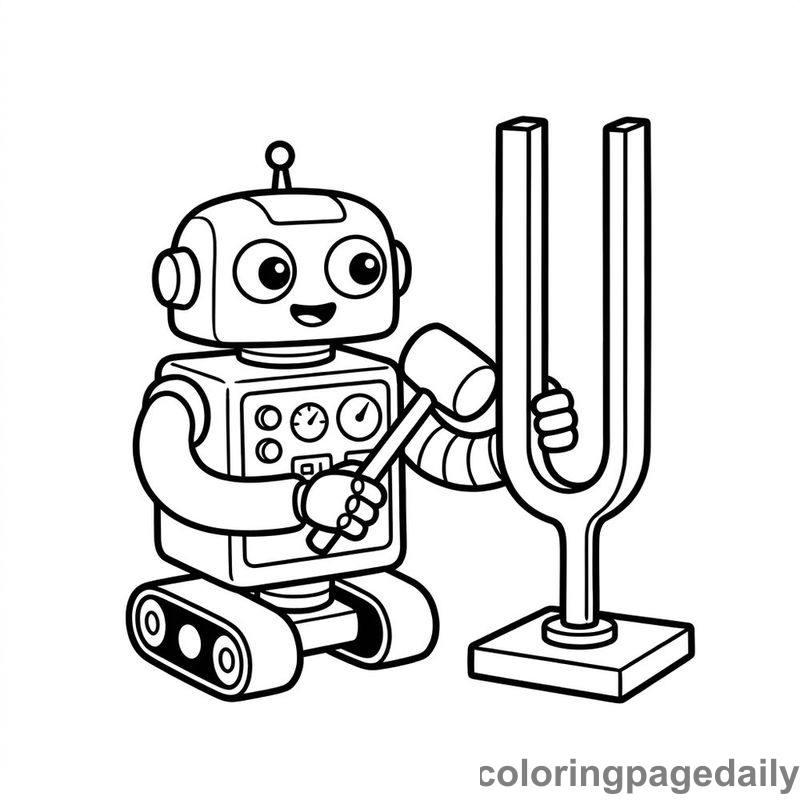
Coloring Tip: Teach kids to draw the invisible! Have them use bright, energetic colors like red, orange, or electric blue to draw curved "echo" lines or zig-zagging sound waves radiating outward from the vibrating prongs of the tuning fork. It’s a fantastic way to introduce the concept that sound is made of moving energy.
Many of the robots in Vol. 2 feature fascinating glass dome heads, and they handle delicate lab equipment like glass test tubes and petri dishes.
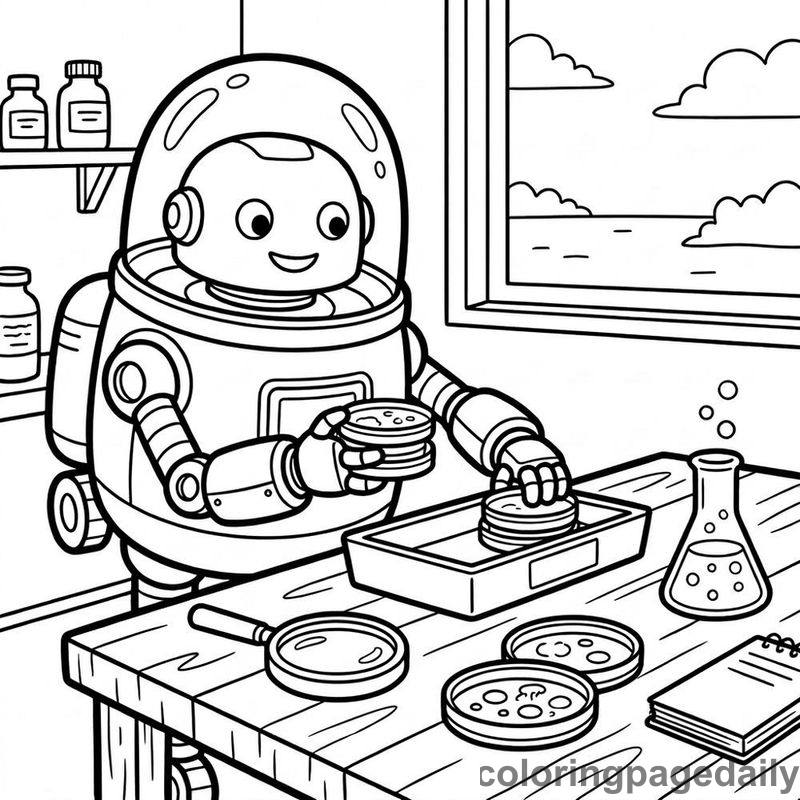
Coloring Tip: Coloring clear glass can seem tricky, but it’s actually a very fun technique to learn. Use a very light blue or gray crayon and color softly. The secret is to leave a few sharp, angled streaks completely white—these act as light reflections! For the petri dishes, add little colorful dots or squiggles inside to represent the microorganisms being studied, leaving the "glass" around them mostly clear.
We can’t wait to see how your young scientists bring this new collection to life. Head over to the gallery to print these new pages, and let the discoveries continue!
This article is part of STEM & Science Discoveries Vol. 2 — browse all 14 coloring pages