Welcome to the latest update in our STEM & Science Discoveries Vol. 3 collection! Our friendly robot scientists have been busy in the lab, moving beyond simple circuits to explore the fascinating worlds of mechanical engineering, renewable energy, and complex chemistry. This month's new coloring pages are designed to spark curiosity while offering fantastic opportunities for kids to practice fun, new coloring techniques.
Here is a look at what is new in the lab, along with some creative coloring tips for parents and teachers to guide their little artists!
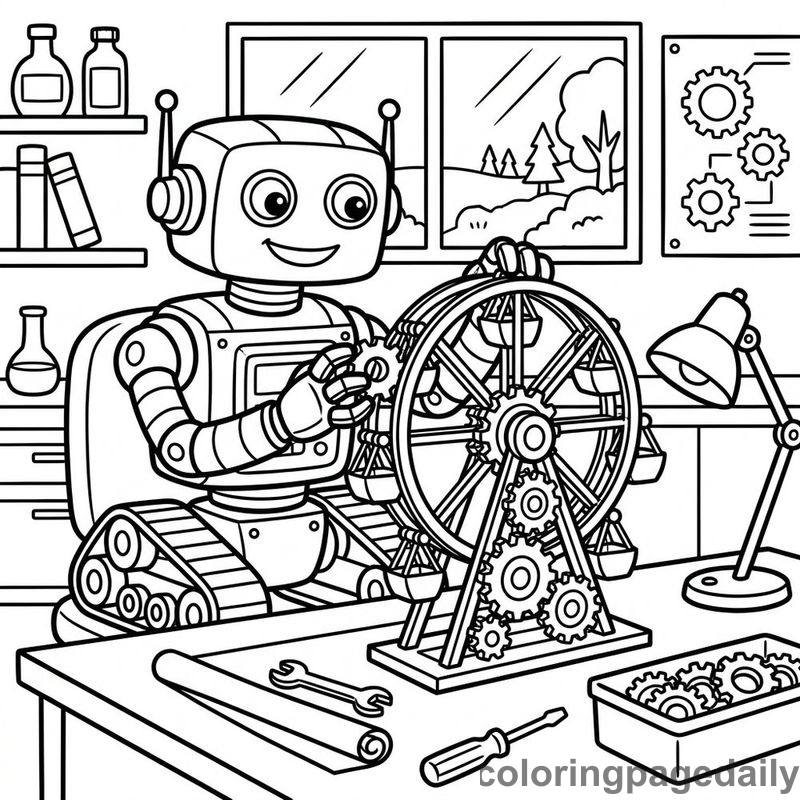
There is something deeply satisfying about watching interlocking gears turn. Our robot friend building a miniature gear Ferris wheel is the perfect way to introduce children to basic mechanical engineering and how wheels and axles work together.
Coloring Tip - The Metallic Sheen: To make those mechanical gears pop, encourage children to use different shades of grey, silver, and even a little light blue to create a shiny steel effect. For a fun twist, they can use yellow and orange to create brass or copper gears, giving the Ferris wheel a cool, vintage steampunk vibe!
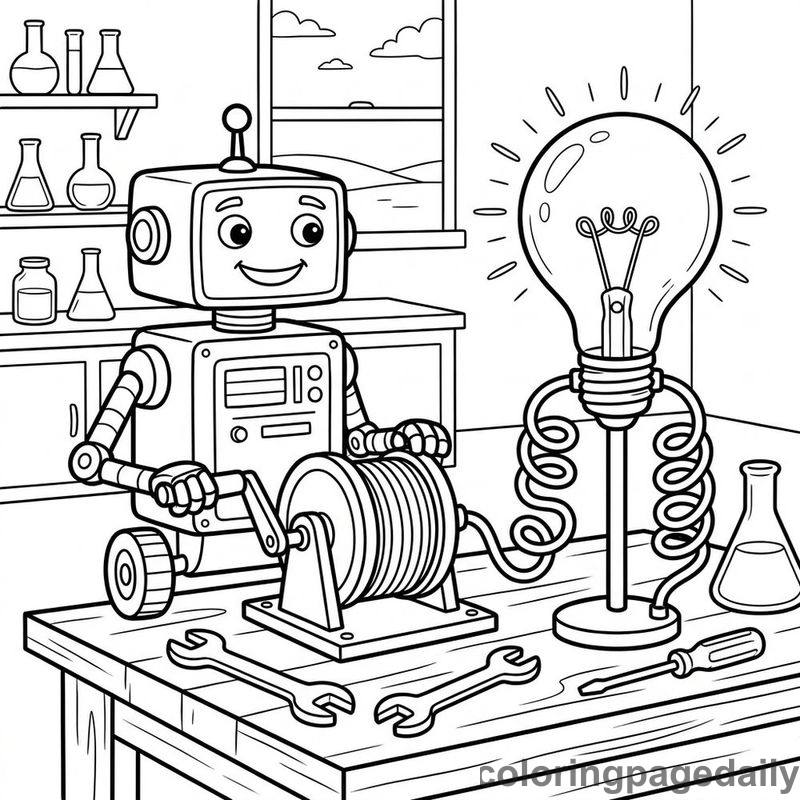
Understanding how mechanical energy converts into electrical energy is a cornerstone of physics. This page features a robot turning a hand-crank generator to power a giant lightbulb, illustrating this concept beautifully for visual learners.
Coloring Tip - The Glowing Effect: Teach your kids how to create a "glow" with their crayons or colored pencils. Start with a bright, vibrant yellow right at the filament of the lightbulb. As they color outward toward the glass, have them press lighter and lighter, eventually blending into a pale yellow or leaving the edges white. This gradient creates a fantastic illusion of real light!
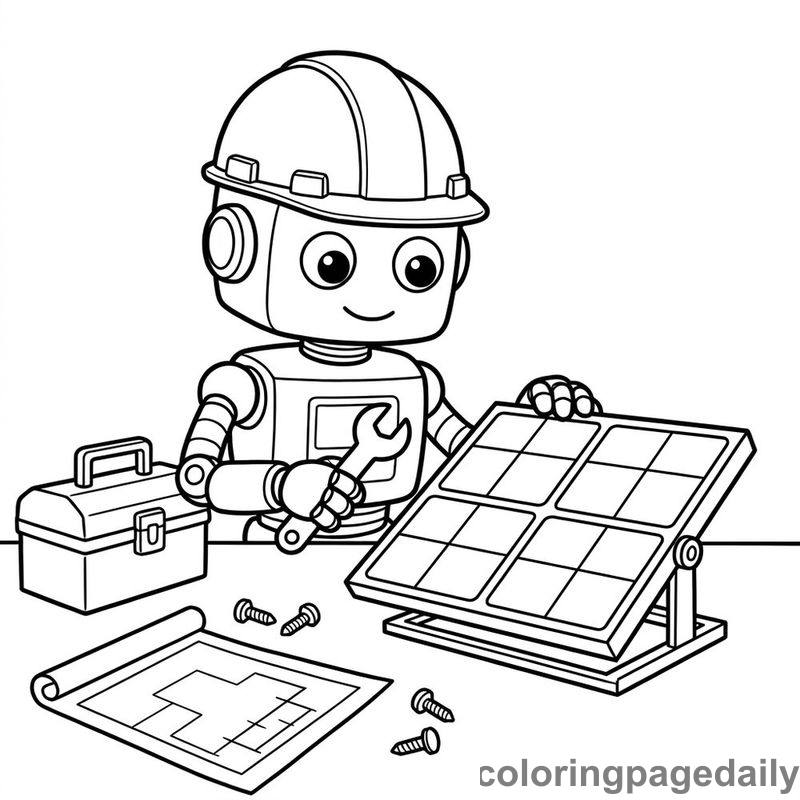
Renewable energy is the future, and our engineering robots are right on top of it! Assembling solar panels is a great jumping-off point for discussions about how the sun provides sustainable power to our homes and cities.
Coloring Tip - Solar Grids: Solar panels are usually a deep, reflective blue. Kids can practice their fine motor skills and line work by coloring the panels dark blue and using a white gel pen or a very sharp white colored pencil to draw the intricate grid lines that capture the sun's rays.
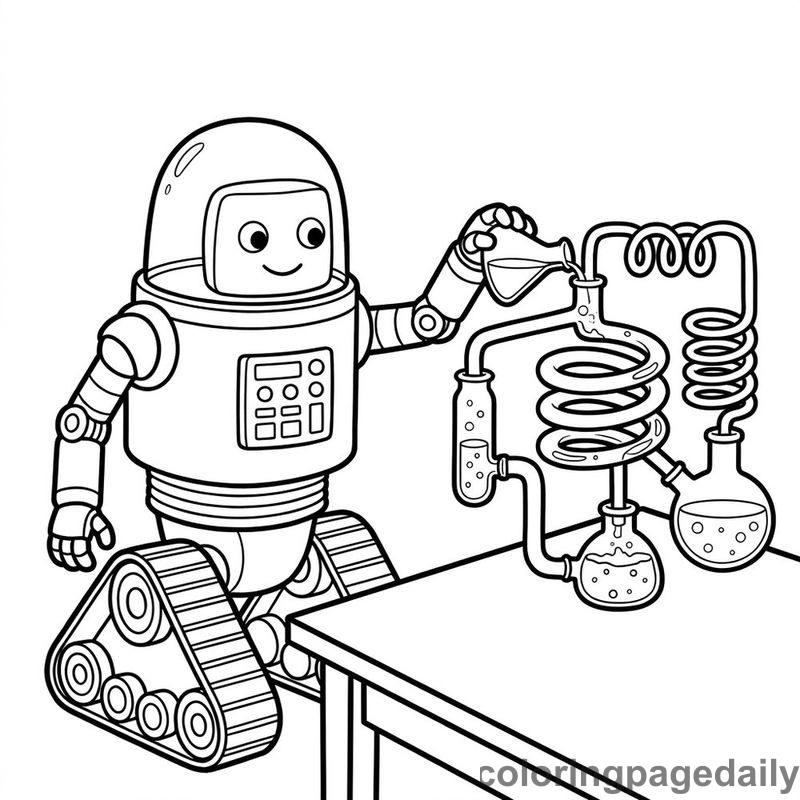
No science lab is complete without a complex chemistry setup! This page, featuring a robot pouring liquids through spiraling tubes, is an absolute favorite for young artists who love playing with color.
Coloring Tip - Liquid Blends: The spiraling tubes are perfect for practicing color mixing. Have your child start with red at the top of the spiral, slowly blend it into yellow to make orange, and then transition into blue to make green at the bottom. It turns a simple coloring page into a beautiful rainbow experiment!
Grab your favorite coloring tools and let these robotic researchers inspire your child's next masterpiece. Happy coloring and discovering!
This article is part of STEM & Science Discoveries Vol. 3 — browse all 9 coloring pages