Welcome to the latest update of our Playful Prehistoric Pals collection! This time, we are focusing on our favorite prehistoric herbivores and their massive appetites. Coloring these foraging scenes is a fantastic way to spark conversations with children about what dinosaurs ate and how they interacted with their lush environments.
Here are some of our newest pages, along with tips for bringing prehistoric plants to life!
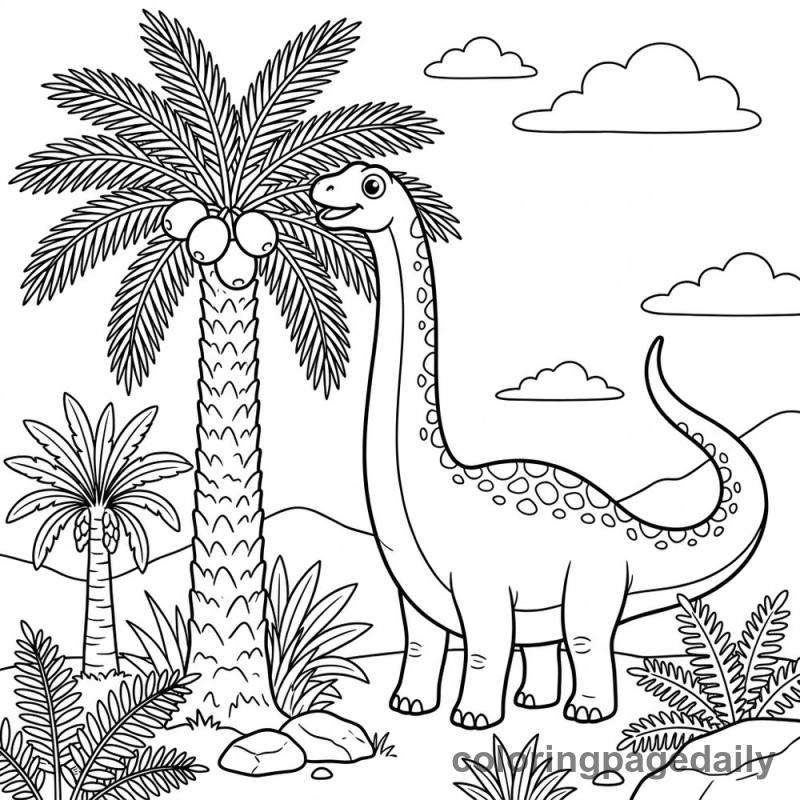
Sauropods like the Diplodocus had incredibly long necks perfectly adapted for browsing high in the treetops. When coloring this towering giant and its cycad snack, encourage kids to use contrasting colors. A bright pop of red, orange, or purple for the prehistoric fruit will make it stand out beautifully against the leafy green canopy.
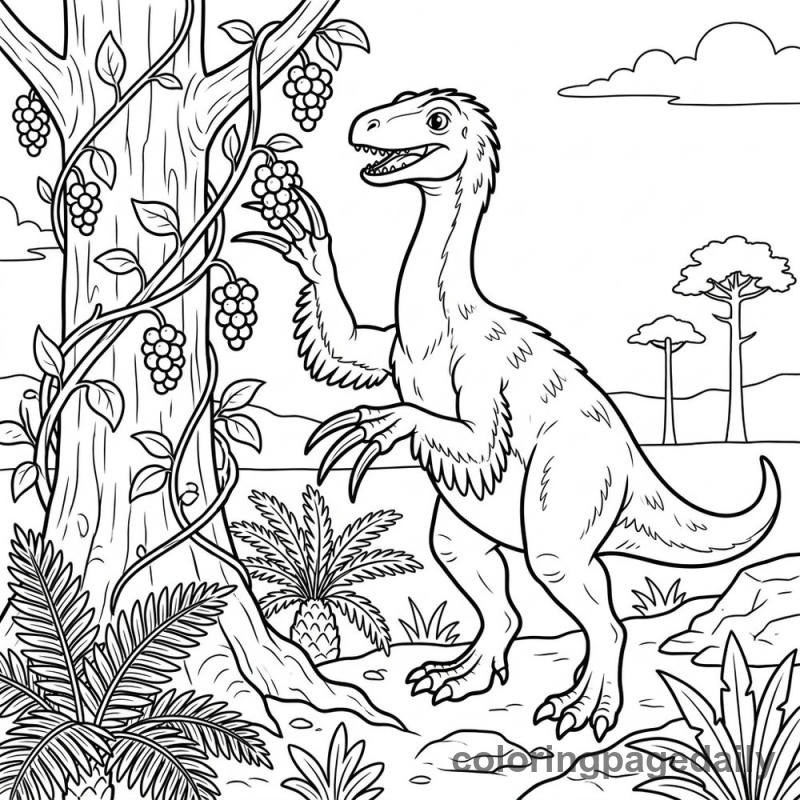
Another fascinating forager is the Therizinosaurus. Despite having some of the longest claws of any known animal—reaching up to three feet long—paleontologists believe this dinosaur was a gentle herbivore. It likely used those impressive claws to hook and pull down high branches to reach leaves and berries. This page is perfect for practicing how to color clusters of berries; try layering different shades of blue and magenta to make them look juicy and ripe!
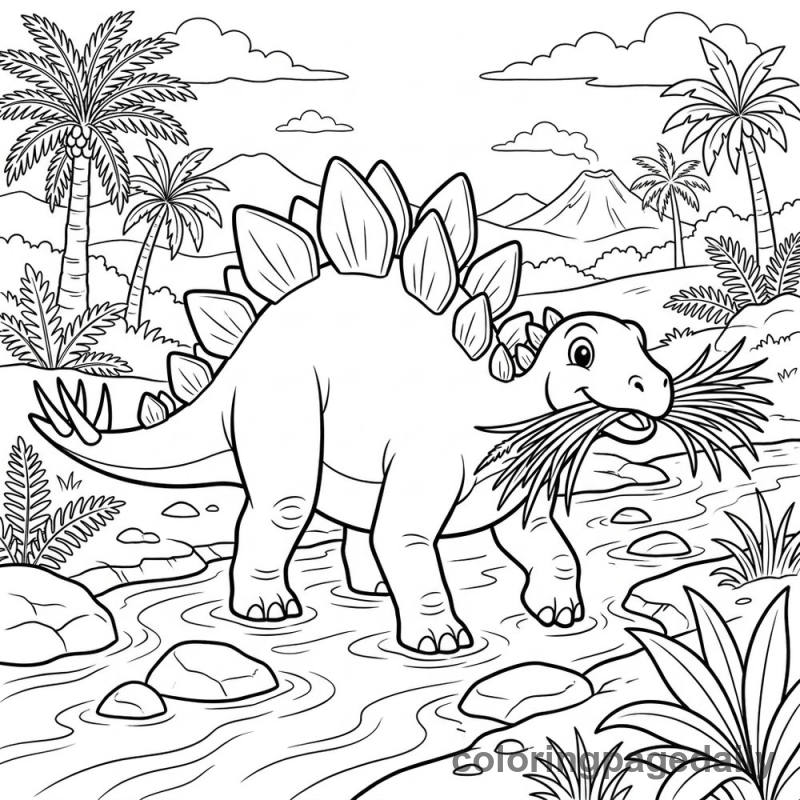
Not all dinosaurs reached for the stars. Low-browsing dinosaurs had to find their meals near the ground. As your little artists color this Stegosaurus carrying a bundle of tall vegetation across a stream, suggest using a mix of yellow-greens and dark forest greens to give the bundle depth and texture. The rushing stream below also offers a great chance to blend cool blues, teals, and whites.
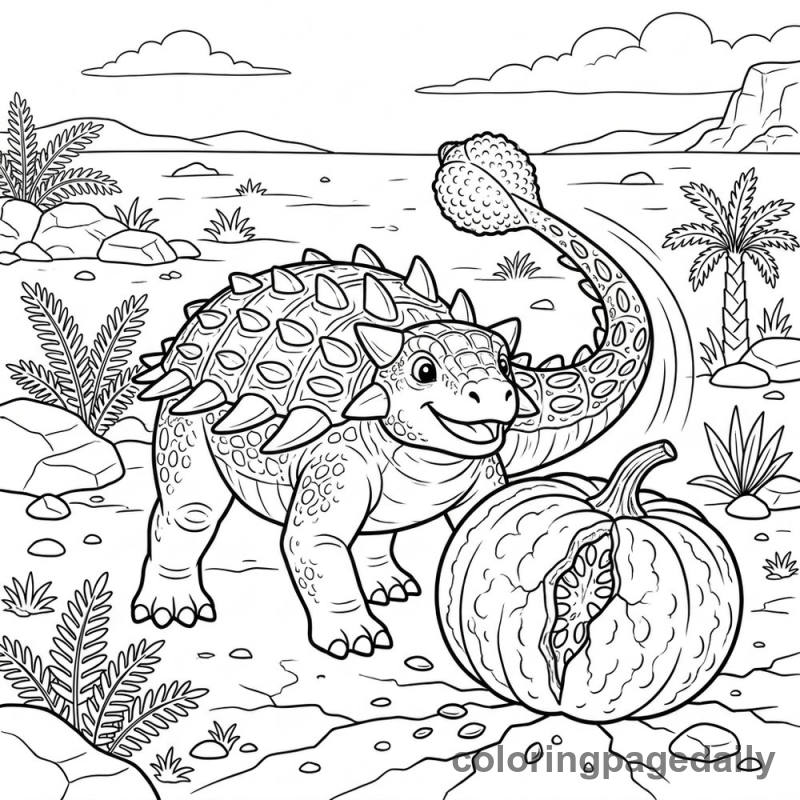
In one of our most playful new scenes, an Ankylosaurus uses its famous clubbed tail to crack open a giant gourd. While the bony club was actually an incredible defense mechanism used to fend off predators, this imaginative scene lets kids think about creative problem-solving in the animal kingdom! Because this scene takes place in a prehistoric desert, it will look spectacular when shaded with warm ochres, sandy yellows, and terracotta oranges.
* Layering Greens: Prehistoric jungles were incredibly lush, filled with giant ferns and cycads. Instead of using just one green crayon for leaves and vines, challenge children to lightly blend lime green with dark emerald to create natural shadows and highlights. * Earthy Environments: Don't forget the ground! Mixing browns with a touch of gray, mustard yellow, or dark green can make the soil, sand, and rocks look much more realistic.
Grab your favorite coloring supplies and let your students or children explore the wonderful world of dinosaur diets today!
This article is part of Playful Prehistoric Pals — browse all 24 coloring pages