Exciting news for parents and teachers! We’ve just expanded the Playful Prehistoric Pals Vol. 2 collection with a fresh batch of delightful coloring pages. This latest update takes our adorable dinosaurs out into vibrant new environments—from sandy riverbanks to sparkling crystal caves.
To help your little artists bring these exciting new backgrounds to life, we've put together a quick guide on coloring different natural textures. Grab your crayons, markers, and colored pencils, and let's dive into the ancient world!
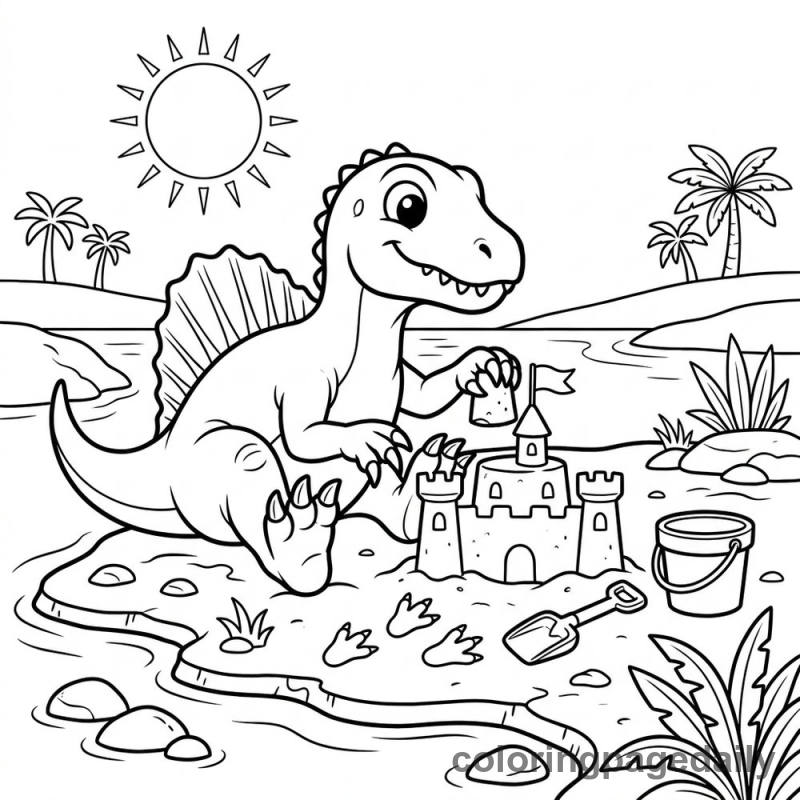
Children often want to make ground textures look realistic rather than just a flat block of color. Introduce them to a technique called "stippling"—making tiny, repetitive dots. When coloring the muddy riverbank where our baby Spinosaurus is building its sandcastle, try using a mix of light brown, tan, and yellow dots. This creates a grainy, sandy texture that makes the page pop!
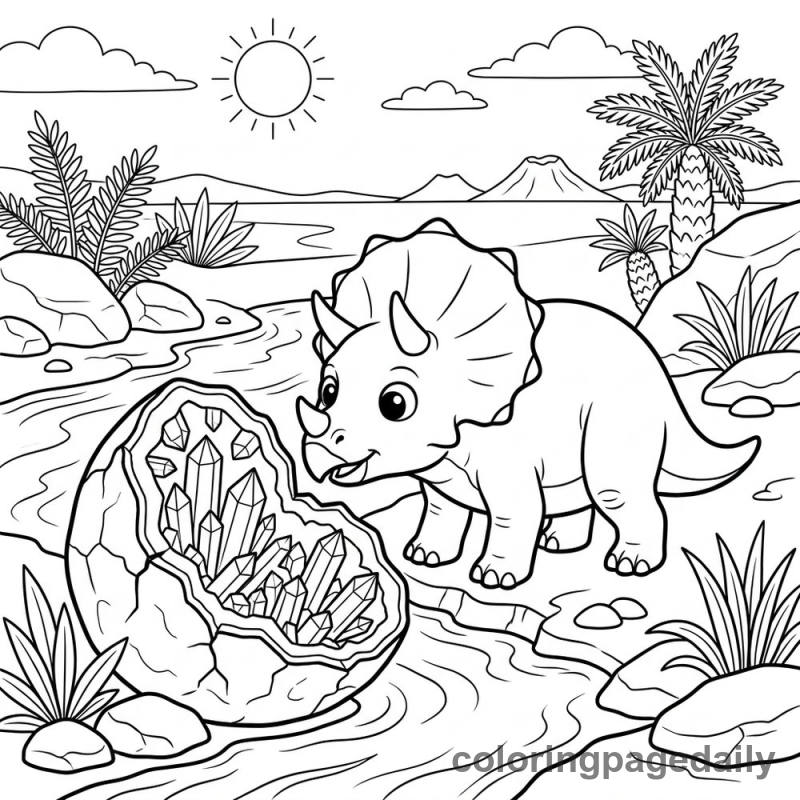
Crystals are all about light and shadow. In our brand-new page featuring a baby Triceratops discovering a geode, teach your students to use sharp color contrasts. Have them use dark jewel tones (like deep purple, sapphire blue, or emerald green) at the outer edges of the crystals, but tell them to leave a tiny sliver of crisp, uncolored white paper right in the center. This empty space tricks the eye into seeing a shiny, reflective surface!
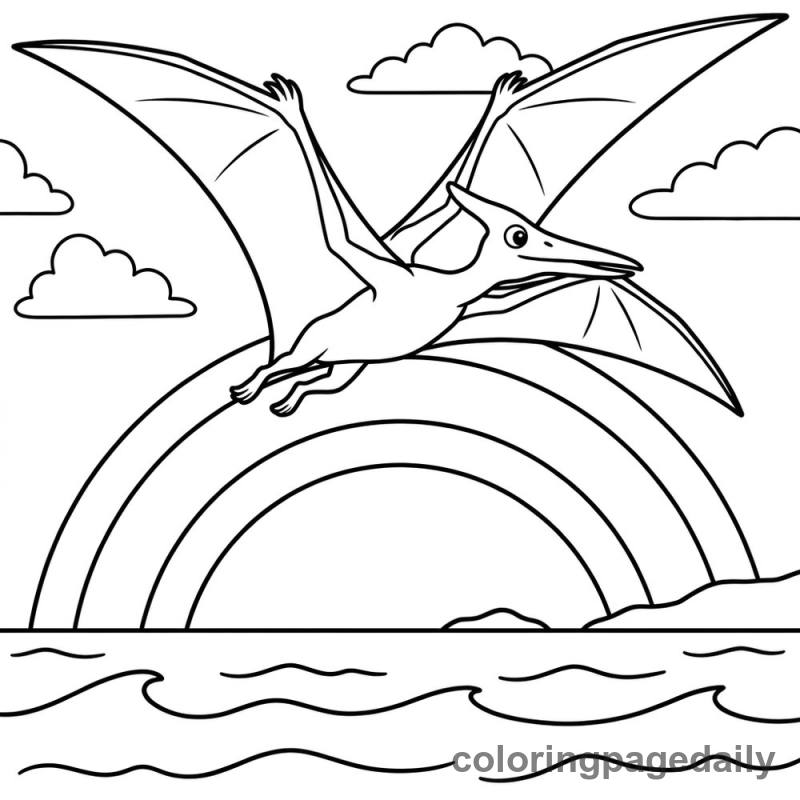
Large expanses of sky are a great opportunity to practice color blending. When working on the majestic Pteranodon soaring past a rainbow, encourage kids to lightly layer light blue colored pencils over the sky, leaving fluffy white circular spaces for clouds. For the rainbow itself, have them slightly overlap the edges of the colors (like lightly mixing red and yellow where they meet to make orange) for a seamless, magical gradient.
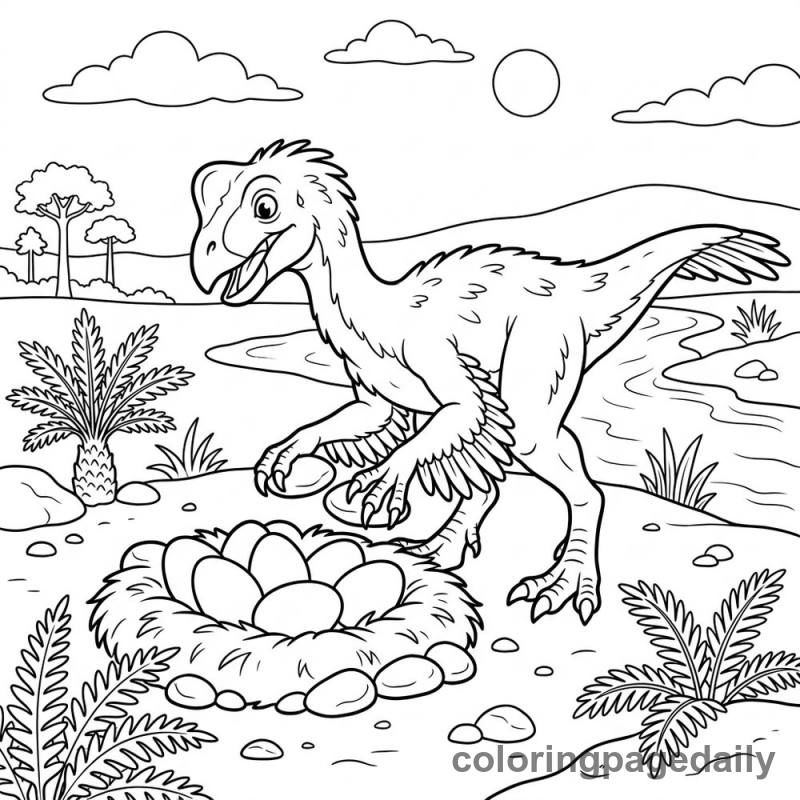
Our new Oviraptor page shows this caring dinosaur arranging river stones around its nest. Educational Note: While the name "Oviraptor" originally meant "egg thief," paleontologists later discovered that these dinosaurs were actually excellent parents who brooded over their own nests, much like modern birds!
To make the stones look smooth and round, teach kids to color the outer edges of the rocks with a darker gray or blue, while keeping the centers very light. This simple shading technique gives flat circles a 3D, rounded appearance.
We hope these texture tips add an extra layer of fun and learning to your coloring sessions. Head over to the gallery to print these new updates today!
This article is part of Playful Prehistoric Pals Vol. 2 — browse all 20 coloring pages