Stepping into our Magical Scenery & Hidden Worlds collection offers an exciting creative challenge for young artists. When everyday objects become giant, enchanting forest landmarks, how do we make them pop off the page?
For parents and teachers looking to introduce new artistic concepts, this collection is the perfect playground for practicing shading, blending, and creating realistic textures. Here are three fun coloring techniques to teach your kids as they explore these secret forest clearings!
Many of our magical items feature metallic elements, like giant telescopes and ancient brass tools.
Did you know that brass is a real-world metal alloy made by combining copper and zinc? This mixture gives it a distinct warm, golden-brown hue. To make the brass elements in the Magical Meadow Compass look truly reflective, encourage kids to use a coloring technique called a gradient.
Have them start with a dark brown or bronze pencil on the outer edges of the compass. Slowly blend that into a warm orange or ochre as they move inward, and leave a bold streak of bright yellow—or even pure white paper—right in the center. This creates the brilliant illusion of a curved, shiny surface catching the forest sunlight!
Water can be a tricky texture to capture, but it presents a fantastic opportunity to practice using "negative space" (intentionally leaving parts of the paper completely uncolored).
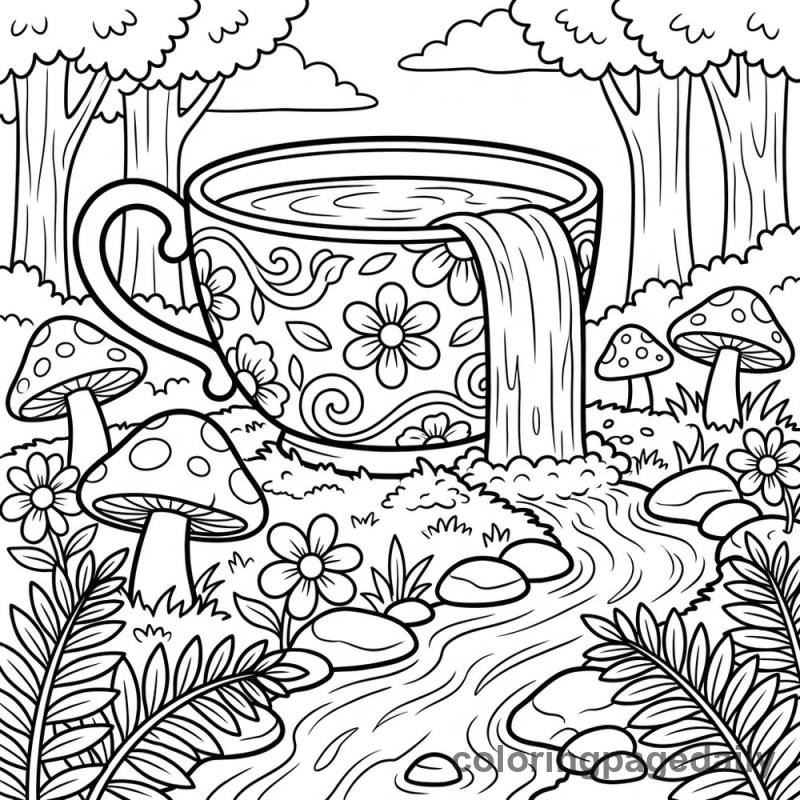
When coloring the gentle stream in the Magical Teacup Waterfall, have your little artists gather their favorite light blues, teals, and seafoams. As they color the falling water, remind them to leave small, wavy slivers of white paper blank. These uncolored areas will act as bright highlights, representing the sun sparkling off the surface of the moving water.
To make these whimsical scenes feel immersive, the magical objects need to blend seamlessly into their natural surroundings.
Take the Magical Willow Tree Door, for example. Instead of just coloring the tree trunk a solid, flat brown, show your child how to layer different colors. By lightly sweeping strokes of olive green or gray near the bottom roots, they can create the look of wild, growing moss. Grounding these giant objects with earthy, natural textures makes the fantasy world feel incredibly real and lived-in.
Grab your colored pencils, crayons, or markers, and let these hidden worlds inspire your next creative afternoon!
This article is part of Magical Scenery & Hidden Worlds — browse all 16 coloring pages