Welcome to the latest update for our Magical Scenery & Hidden Worlds Vol. 2 collection! We are thrilled to introduce a fresh batch of illustrations that perfectly balance the structured, geometric lines of vintage objects with the wild, organic beauty of nature. For parents and teachers, these new pages offer an incredible opportunity to teach children about different coloring techniques—specifically, how to adapt their crayon or pencil strokes when moving from a manufactured object to a natural element.
Let's dive into some of the newest additions and explore tips for making these whimsical scenes leap off the page!
One of our most enchanting new pages features a miniature forest thriving inside a giant vintage lightbulb. When coloring objects inside of other objects, it can be tricky to make the image look three-dimensional.
Coloring Tip: To show that the forest is inside the lightbulb, kids can practice layering and color intensity. Encourage them to use softer, pastel greens for the foliage inside the glass, and brighter, more saturated greens for the grass growing outside in the meadow. This variation in intensity creates a wonderful sense of depth and enclosure!
Our new Magical Rotary Telephone House page brings a wave of nostalgia. Manufactured items like vintage phones feature uniform, solid colors, which contrast beautifully with the delicate, varied petals of the daffodils growing around it.
Coloring Tip: This page is excellent for practicing two distinct coloring styles. Kids can practice "color blocking" by coloring the phone in one solid, even, heavy shade of their favorite color. For the organic daffodils, they can switch to "blending"—lightly mixing yellows, oranges, and whites to capture the natural, uneven color variations found in real flowers.
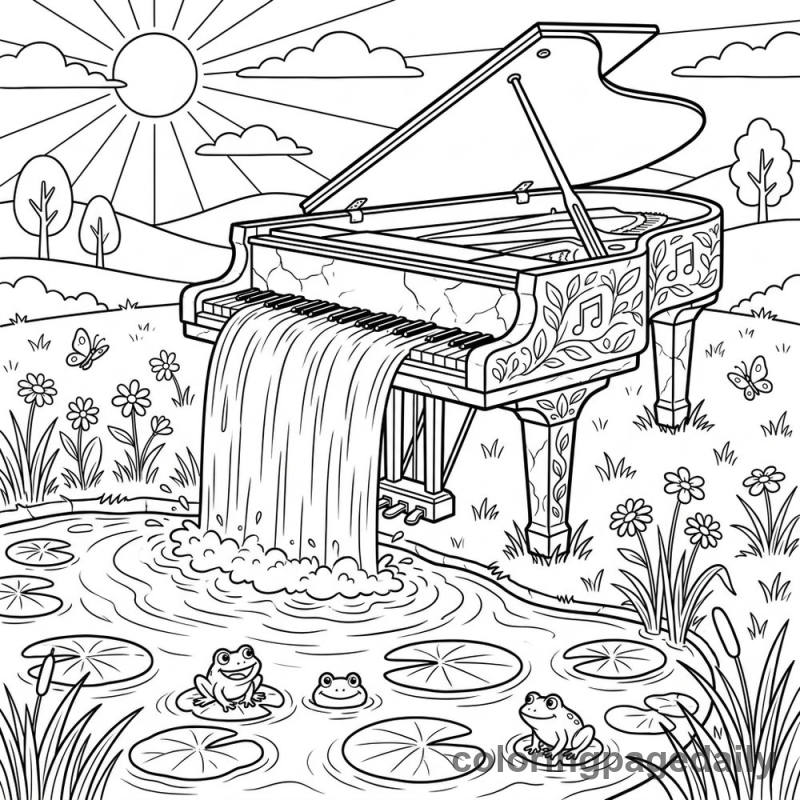
Music and nature harmonize beautifully in the Magical Grand Piano Waterfall. This illustration provides a fantastic lesson in conveying movement through the direction of a pencil or crayon.
Coloring Tip: This page is perfect for practicing directional coloring! Have your young artists use straight, rigid, up-and-down strokes for the geometric piano legs and heavy keys. Then, when they move to the cascading water, have them switch to swirling, curved, downward strokes. Changing the direction of their coloring naturally separates the solid instrument from the flowing water.
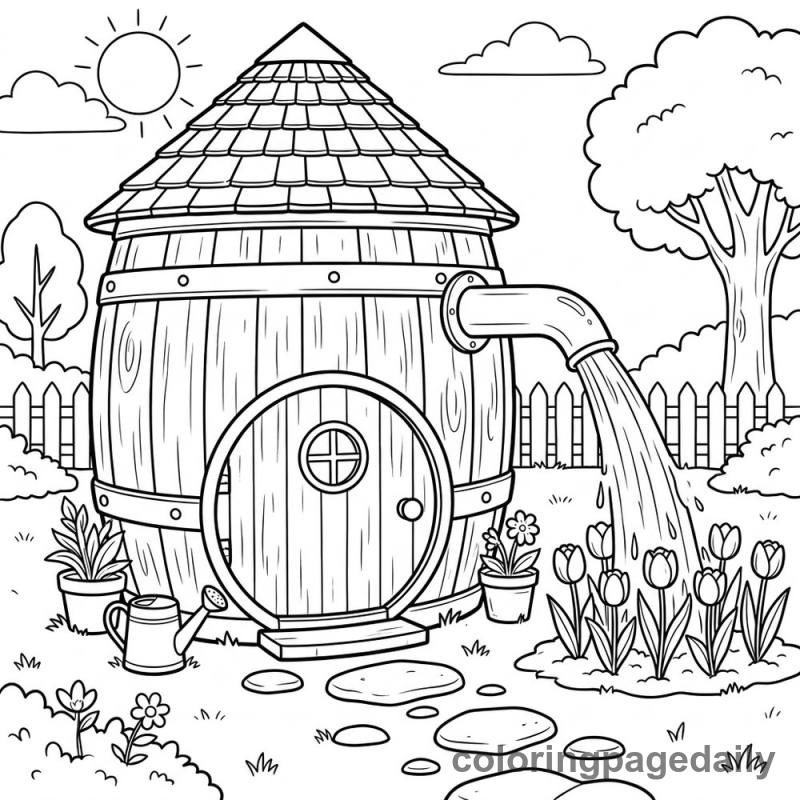
Finally, the Rain Barrel House Garden is a delightful scene where an oversized rain barrel uses its spout to water a bed of spring tulips. It's a fun, self-sustaining magical ecosystem!
Coloring Tip: Use this page to practice "narrative coloring"—choosing colors that tell the story of the image. By coloring the water droplets in bright, sparkling blues and silvers, children can draw attention to the "action" of the scene: the magical house taking care of its own garden.
These new pages aren't just fun to color; they are wonderful prompts for creative play. Ask your little ones: Who answers the rotary phone? What kind of music does the waterfall piano play?
Head over to the gallery to print these new pages today and let the magical coloring begin!
This article is part of Magical Scenery & Hidden Worlds Vol. 2 — browse all 11 coloring pages