Welcome to the latest update in our Community Helpers and Professions collection! We've just added several brand-new coloring pages featuring a wide variety of exciting careers. To help your little artists get the most out of these new additions, we've put together a guide filled with creative coloring techniques.
From shiny metallic surfaces to rich, earthy textures, these tips will help kids elevate their artwork while learning about the essential people who make our communities thrive.
When coloring our new Chocolatier page, kids can experiment with different shades of brown to represent milk, dark, and white chocolate.
Coloring Tip: To make the melted chocolate look shiny and realistic, encourage your child to leave a tiny sliver of white space uncolored on the curves of the liquid as it pours from the bowl. This creates a "highlight" effect, making the chocolate look perfectly glossy and ready to eat!

Meteorologists use bright, contrasting colors to show different weather patterns on their screens. This page is a fantastic opportunity to practice color blending.
Coloring Tip: Encourage kids to practice their blending skills on the weather map. Use a yellow crayon for the sun, and lightly layer orange around the edges to make it glow. If they want to add a warm front or cool front to the map, they can practice blending red into orange, or deep blue into light blue, mimicking real meteorological charts.

The Ceramic Artist page is perfect for exploring earthy color palettes like terracotta, ochre, and slate gray. But how do you capture the movement of the wheel?
Coloring Tip: To show that the potter's wheel is spinning fast, kids can use colored pencils to lightly draw curved, sweeping lines around the base of the clay. Using a soft smudge technique with a tissue or their finger (if using soft pencils or pastels) can also blur the edges slightly, giving the brilliant illusion of fast motion!
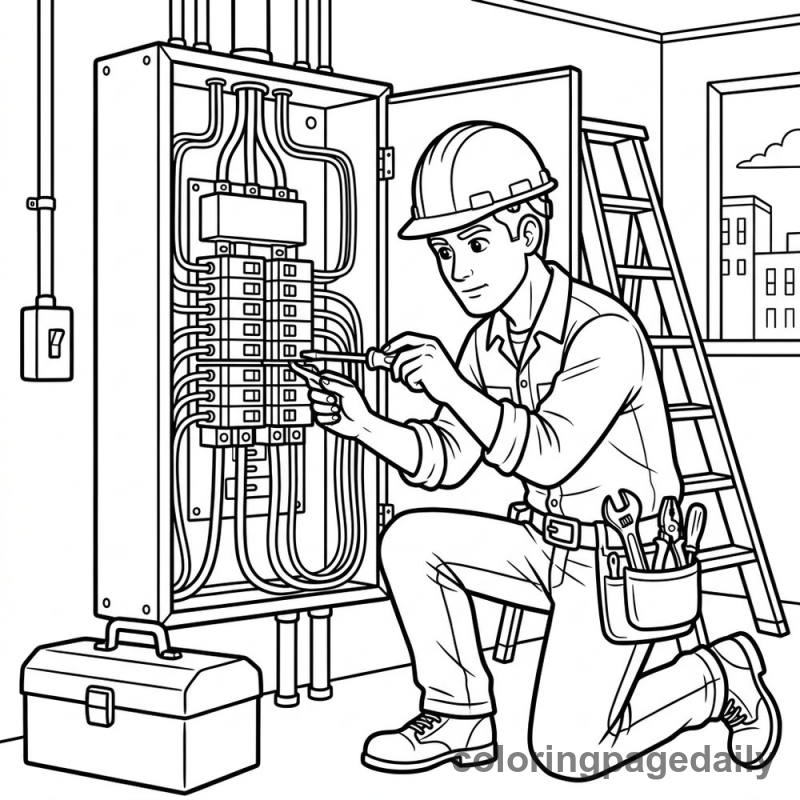
Electricians work with lots of metal tools and complex wires. This page is excellent for practicing precision and learning about organization.
Coloring Tip: To create a metallic look for the breaker box and tools, mix gray and light blue crayons. For the wires, this is a great opportunity to talk about "color coding." Have your child use primary colors—red, blue, and yellow—to color the different wires, practicing how to stay inside the narrow lines to ensure the "electricity" flows safely to its destination.
We hope these coloring tips inspire your young artists to try new techniques as they explore our latest Community Helpers pages. Whether they are shading sweet treats or blending weather fronts, every page is a chance to build fine motor skills and discover a new potential career path. Grab your favorite crayons, markers, or colored pencils, and let the creativity flow!
This article is part of Community Helpers & Professions — browse all 20 coloring pages