Welcome to a world where creativity meets curiosity! Coloring is more than just a quiet activity; it's a fantastic opportunity for parents and teachers to introduce foundational STEM (Science, Technology, Engineering, and Mathematics) concepts. As your little ones bring our STEM & Science Discoveries collection to life, you can spark their imaginations with these fascinating, kid-friendly educational facts.
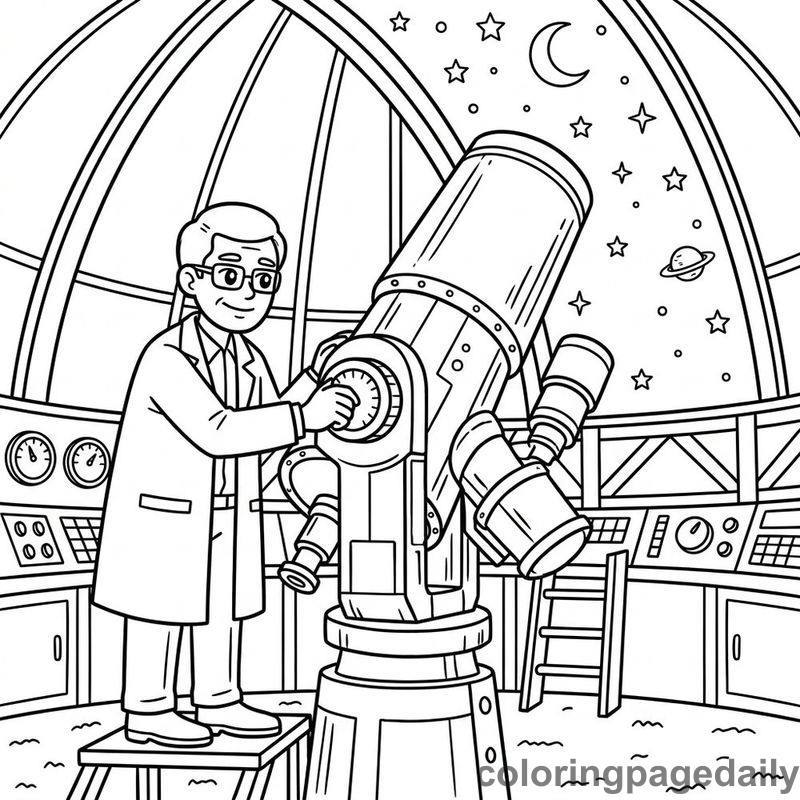
When kids look up at the night sky, they are often seeing history! Did you know that telescopes are essentially giant "light buckets"? While we often think telescopes just magnify objects, their most important job is actually gathering light. The larger the mirrors or lenses inside, the more light they collect, allowing astronomers to see incredibly faint and distant galaxies. The light from some of these stars has traveled through space for millions of years just to reach our eyes!
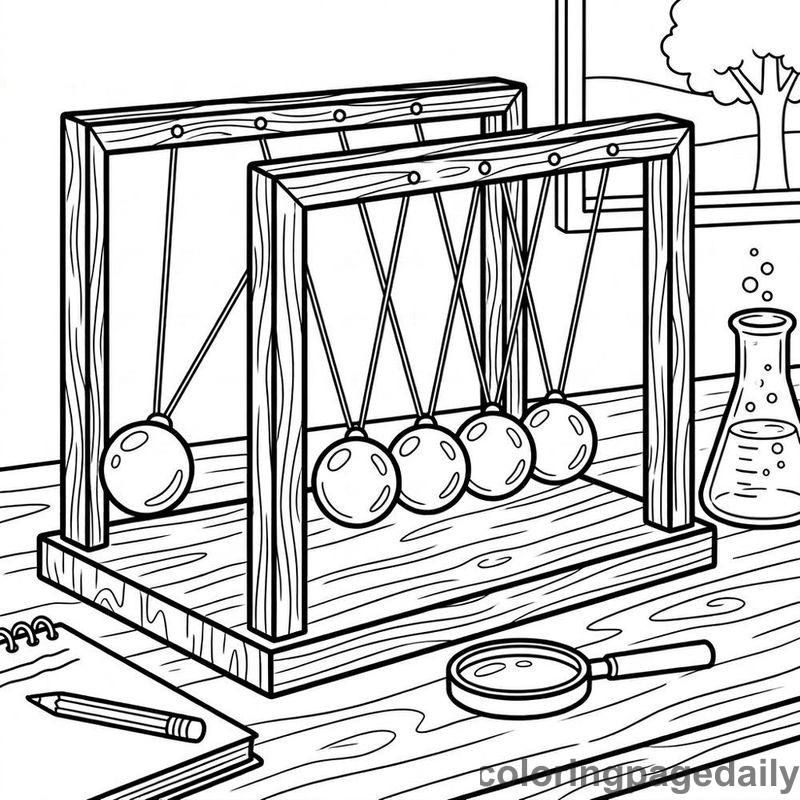
Physics is all about understanding how the universe behaves, and nothing demonstrates this quite like a Newton's Cradle. This classic desk toy perfectly illustrates Sir Isaac Newton's laws of motion, specifically the "conservation of momentum and energy." When you pull back the first metal sphere and let it go, it strikes the next ball. The energy passes seamlessly through the stationary middle balls until it reaches the last one, sending it swinging outward. The energy isn't lost; it just transfers from one object to another!
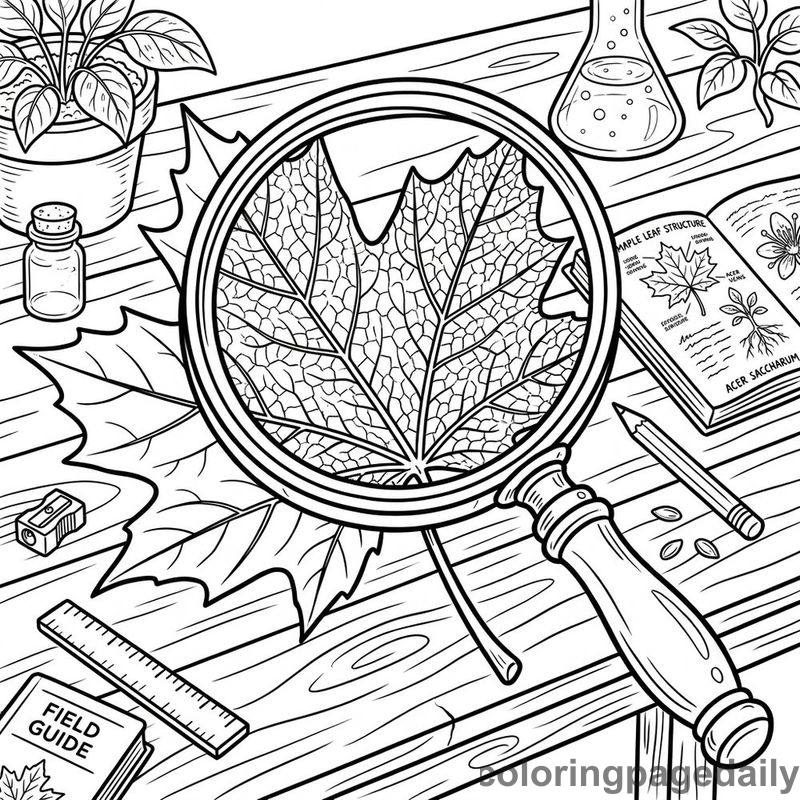
Biology teaches us that even the simplest things in nature are incredibly complex. Take a closer look at a fallen leaf under a magnifying glass. Those tiny, branching lines you see aren't just for decoration—they are nature's plumbing system! Leaf veins contain tiny tubes called xylem and phloem. The xylem transports water and minerals from the roots up to the leaves, while the phloem carries the food (sugar) made during photosynthesis to the rest of the plant. They also act like a skeleton, keeping the leaf flat so it can soak up maximum sunlight.

Engineering is the art of solving problems using math and science. One of the most fundamental engineering tools is the gear. A gear is simply a wheel with teeth along its edge. When two gears interlock, turning one causes the other to turn. Here is the cool part: if a small gear turns a larger gear, it increases the turning force (torque) but decreases the speed. This "mechanical advantage" is what allows clocks to tick accurately, bicycles to climb steep hills, and complex robots to move their joints!
By pairing these fun facts with our engaging coloring pages, you can help children discover that science isn't just a subject in a textbook—it's the amazing way our world works. Grab your crayons, print out your favorite pages, and let the learning begin!
This article is part of STEM & Science Discoveries — browse all 19 coloring pages