Are your little learners ready to take their coloring skills to the next dimension? While we’ve previously shared tips on capturing the perfect metallic sheen for our robotic helpers, our STEM & Science Discoveries collection offers so many more artistic opportunities.
From the depths of the cosmos to the microscopic details of a leaf, science is full of dynamic concepts. Here are some creative coloring tips to help parents and educators teach children about motion, light, and natural patterns through art.
Science is always in motion! Whether it’s kinetic energy or spinning mechanical parts, kids can use specific coloring techniques to show movement on a static page.
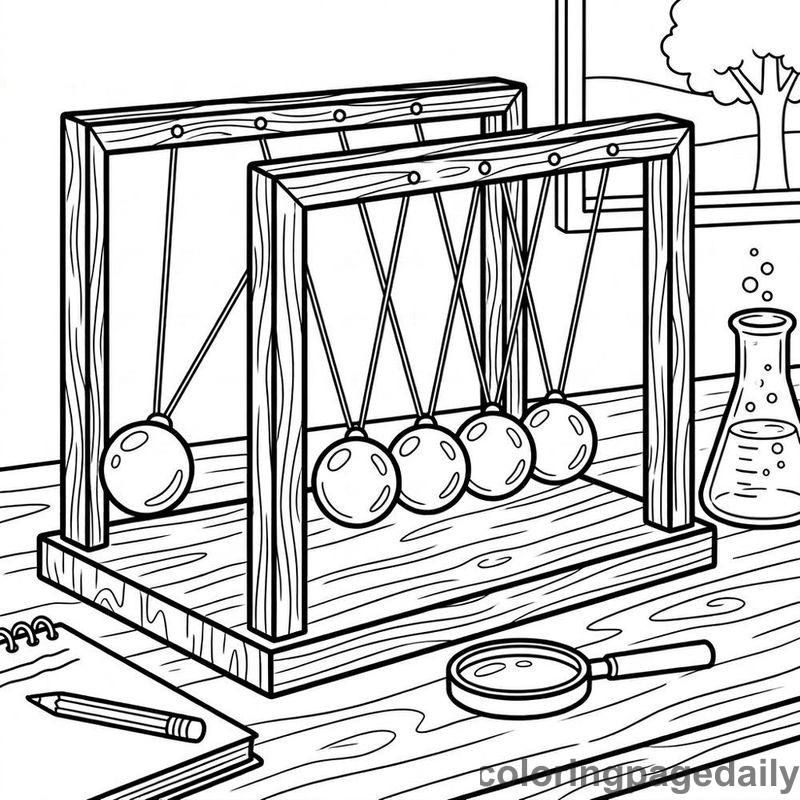
The Tip: When coloring objects like the swinging sphere of a Newton's Cradle, teach children to use a technique called "motion blur." By lightly smudging the crayon or using faint, directional pencil strokes behind the moving object, they can create the illusion of speed and kinetic energy.

For static diagrams, like the gears on our robot's chalkboard, using high-contrast neon colors against a dark, dusty background will make the mechanical concepts visually jump off the page, simulating the bright spark of an idea!
Astronomy and space exploration pages are perfect for experimenting with light and shadow. How do you make the vacuum of space look as vibrant as it is in real life?
The Tip: To create a realistic "glowing" effect for stars, planets, or the windows of a futuristic agricultural space pod, start by leaving a thin border of untouched white paper around the light source. Next, apply a bright, vibrant color like neon yellow or light blue just outside the white line. Finally, use dark navy, deep purple, or black for the surrounding space. The extreme contrast between the dark background and the white center tricks the eye into seeing a radiant glow.
Biology and earth sciences are filled with fascinating, repetitive patterns that are a joy to color.
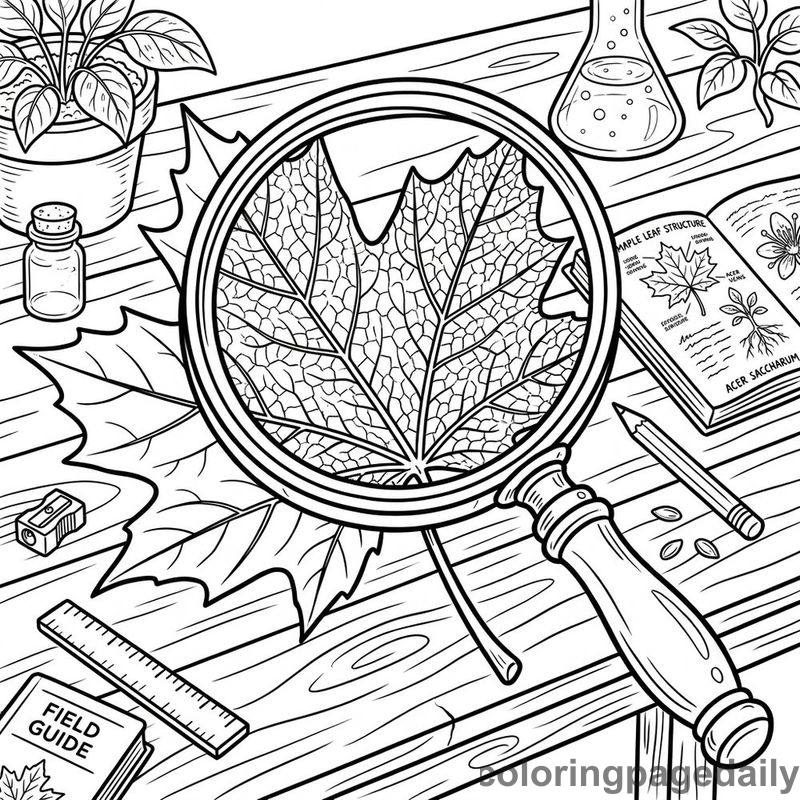
The Tip: When coloring the magnified veins of a leaf, encourage kids to practice gradient blending. Have them press firmly with a dark green pencil near the center stem, gradually reducing their pressure to blend into a light, sunny yellow-green at the edges. This shading technique adds realistic depth. Similarly, if they are coloring geometric lab crystals, using different shades of the same color on adjacent facets will instantly give the crystals a three-dimensional, realistic appearance.
By introducing these simple artistic concepts, you can turn a fun coloring session into a deeper conversation about how light, movement, and biology work in the real world. Grab your art supplies and let the scientific discoveries begin!
This article is part of STEM & Science Discoveries — browse all 19 coloring pages