Welcome back to the latest update for our Playful Prehistoric Pals collection! This week, we are excited to introduce a brand-new batch of coloring pages that highlight the fascinating and unique physical features of our favorite dinosaurs.
Instead of just roaming around, these prehistoric pals are using their specialized tails, claws, plates, and crests to interact with their environment in clever, playful ways. It is a fantastic opportunity for children to learn a bit of dinosaur anatomy while practicing some fun new coloring techniques!
The Ankylosaurus is famous for the heavy, bony club at the end of its tail. While paleontologists believe this impressive feature was primarily used as a powerful defense mechanism against predators, our gentle giants have found some much more playful uses for it!
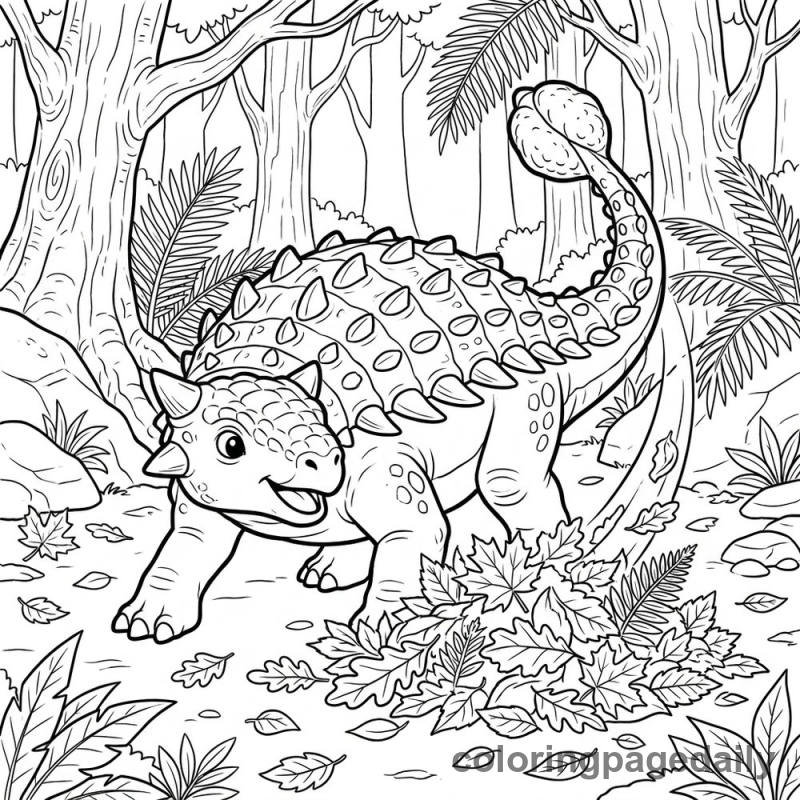
In this charming forest scene, an Ankylosaurus is using its tail to sweep up a neat pile of autumn leaves.
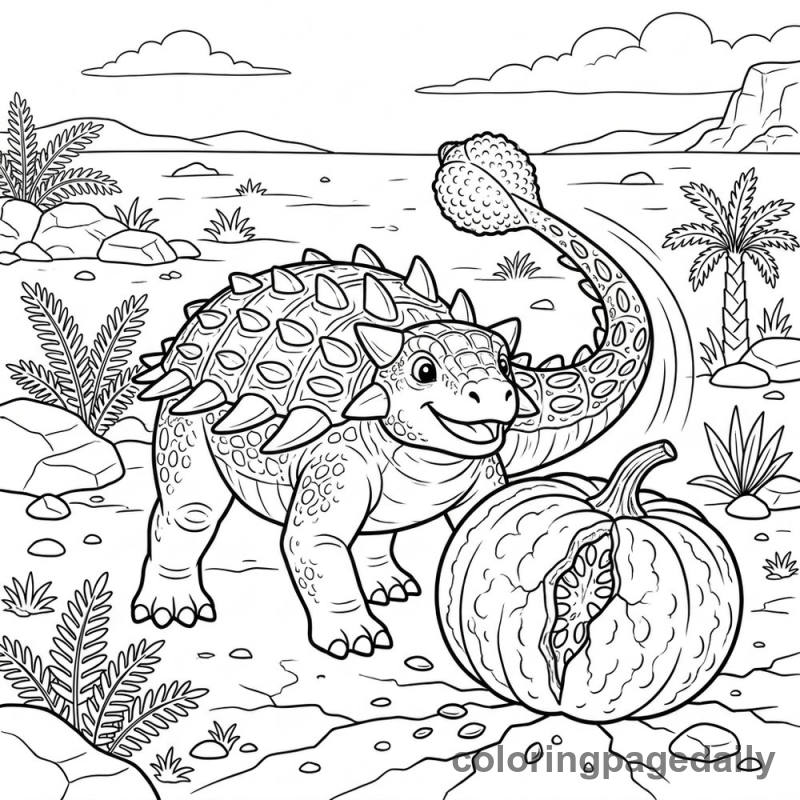
Meanwhile, out in the prehistoric desert, another Ankylosaurus is using that same heavy club to crack open a tough, giant gourd for a delicious snack.
Coloring Tip: These scenes are perfect for practicing color contrast! Encourage your little artists to color the tough, bony armor of the Ankylosaurus in earthy grays, browns, or deep greens. Then, make the surrounding environment pop by using bright, warm colors—like vibrant oranges, yellows, and reds—for the fall leaves and the giant gourd.
Next up, we have a dinosaur that boasts some of the most extraordinary hands in prehistoric history: the Therizinosaurus.
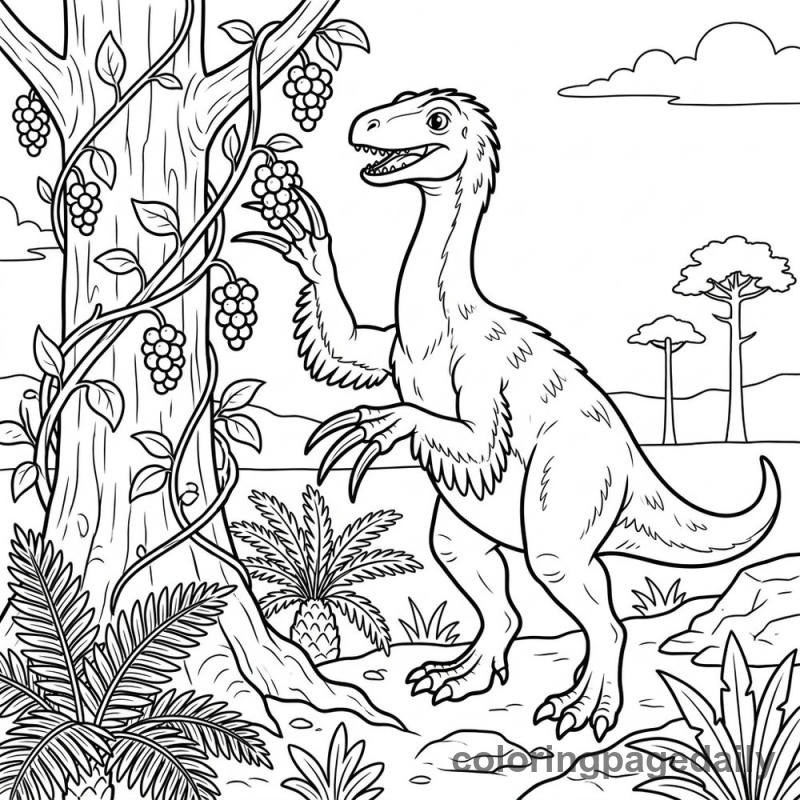
Did you know that the Therizinosaurus had claws that could grow up to three feet long? Despite looking a bit intimidating, scientists believe this dinosaur was actually a gentle herbivore that used its massive claws to hook and pull down leafy branches. In our new coloring page, this friendly dino is carefully plucking fresh berries from a high vine.
Coloring Tip: Try using a pale bone color or a cool slate gray for those famous claws to make them stand out against the dinosaur's skin. Kids can have a blast dotting the vines with bright crimson or deep purple berries!
Finally, we are bringing some zen-like focus to the collection with two dinosaurs showing off their balancing skills.
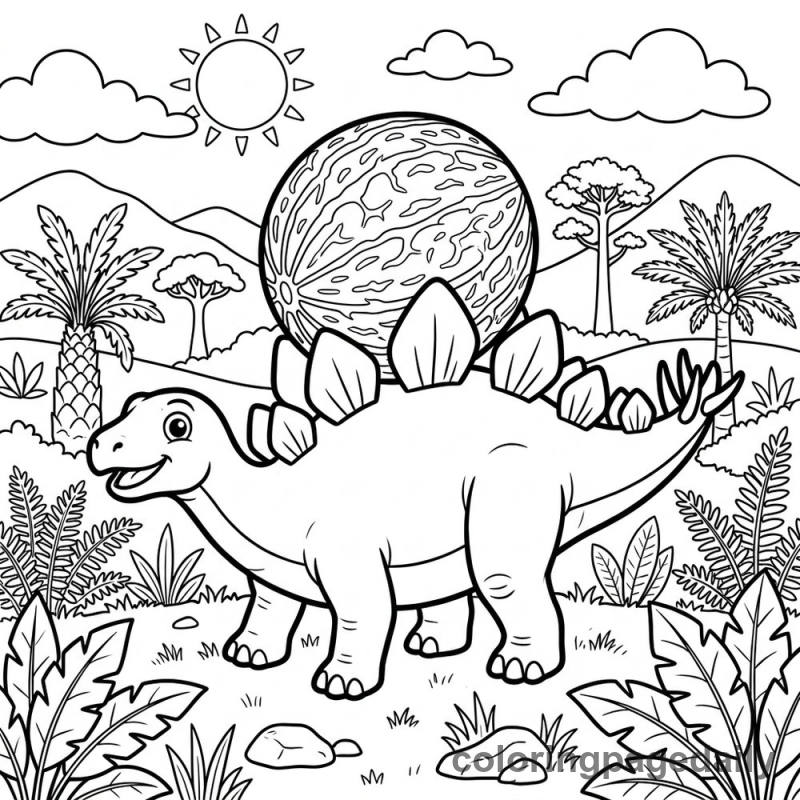
While Stegosaurus plates were likely used to help the dinosaur control its body temperature or show off to other dinosaurs, this silly fellow has decided they make the perfect shelf for a prehistoric melon!
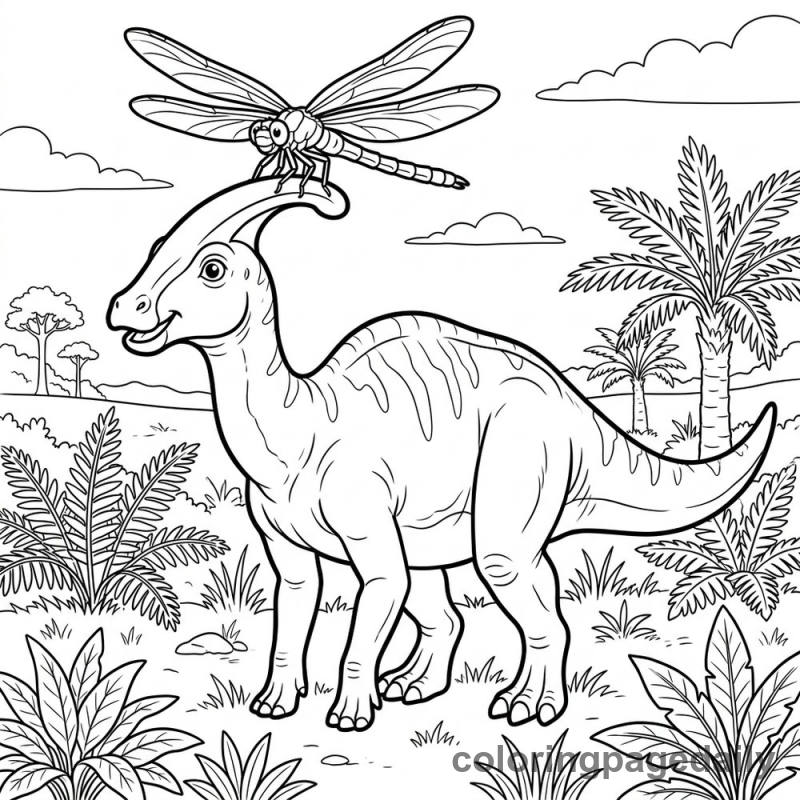
Similarly, the Parasaurolophus—known for the long, hollow crest on its head used to make loud, trumpeting sounds—is standing perfectly still to let a giant prehistoric dragonfly rest on its crest.
Coloring Tip: The Stegosaurus plates are a wonderful place to practice blending colors. Try starting with a deep red at the base of the plate and fading up to a bright yellow at the tip, just like a sunset. For the dragonfly, encourage kids to use light, pastel blues or greens, leaving a little bit of white space to make the wings look delicate and translucent.
Head over to the gallery to print these clever new additions, and let the prehistoric playtime begin!
This article is part of Playful Prehistoric Pals — browse all 24 coloring pages