When kids dive into our Playful Prehistoric Pals collection, they often reach straight for their favorite greens and browns to color their favorite dinosaurs. But what about the magnificent world around them? The Mesozoic era was filled with winding rivers, towering waterfalls, and vast skies.
In this guide, we’ll share fun, easy techniques for parents and teachers to help little artists bring prehistoric aquatic environments to life, expanding their coloring skills beyond just the dinosaurs!
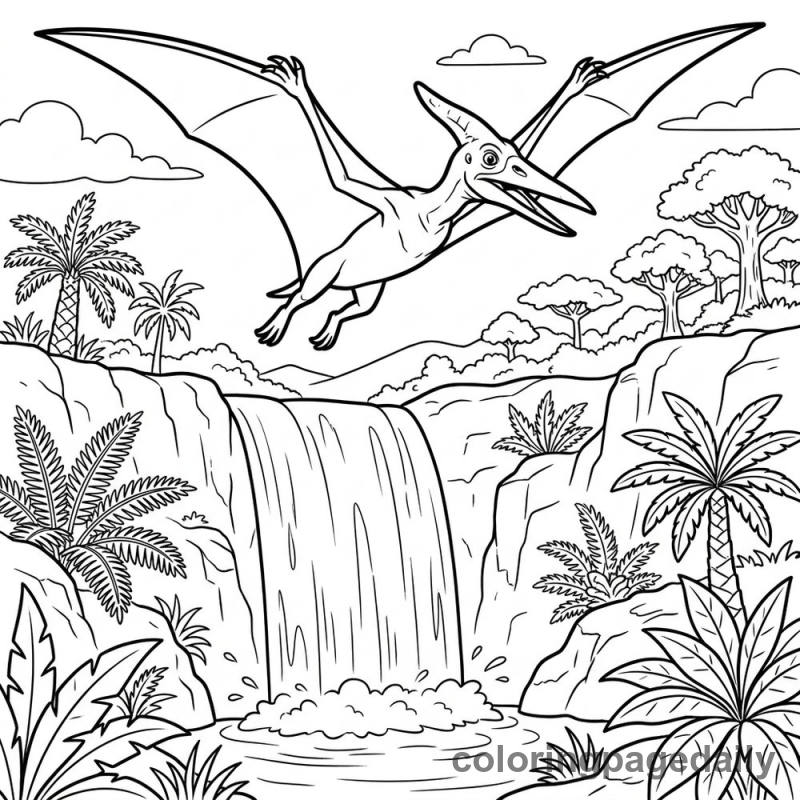
Waterfalls are incredibly fun to color because they are full of movement! To create the look of rushing water, encourage children to use a mix of dark blue, light blue, and white crayons. Instead of coloring the waterfall with one solid shade, they can draw long, vertical lines that follow the direction of the falling water. Leaving a few white spaces helps create the illusion of splashing foam at the bottom.
Fun Educational Fact: While coloring this scene, you can share with your kids that the Pteranodon wasn't actually a dinosaur! It was a pterosaur, a type of flying reptile that lived alongside dinosaurs during the Late Cretaceous period. To make this majestic creature stand out against the cool blue sky and water, try coloring its wings with warm, contrasting colors like fiery orange, bright yellow, or bold red.
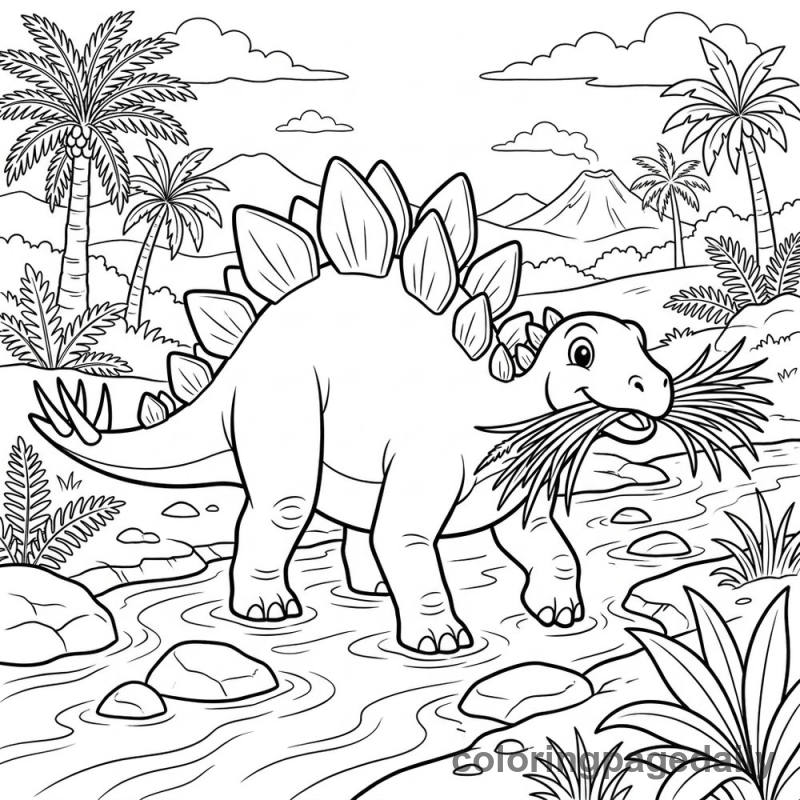
Coloring a shallow stream requires a different approach than a roaring waterfall. When coloring the water around the Stegosaurus’s feet, horizontal strokes work best. Using light teal or aqua with gentle, side-to-side motions creates the look of calm, flowing water.
Don't forget the rocks! Prehistoric streams were lined with stones of all shapes and sizes. Instead of using a single gray crayon, kids can mix in hints of brown, dark green, or even purple to give the rocks a textured, mossy appearance. This is a great opportunity to talk about how flowing water shapes rocks over time, making them smooth and round.
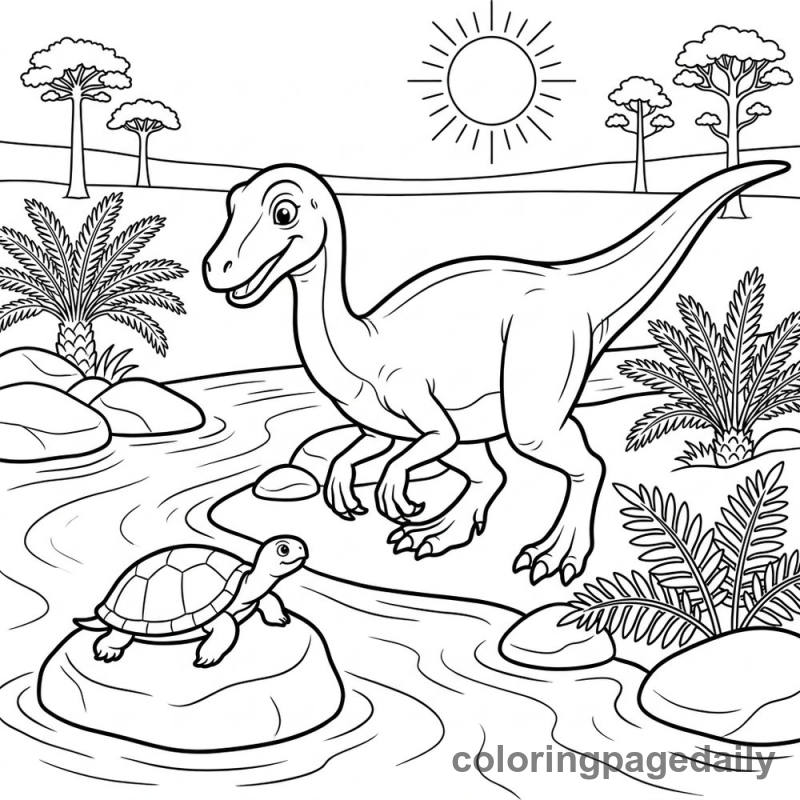
Riversides were bustling with life, both big and small. In this peaceful scene, the focus is on the muddy or sandy banks where the Gallimimus and the prehistoric turtle meet. For sandy riverbanks, layering yellow, light brown, and a touch of peach creates a warm, sunbaked texture. If they want a muddy bank, darker browns and blacks lightly smudged together work perfectly.
Coloring Tip: To make the tiny turtle pop out from the background, color the stone it rests on in a cool, solid gray, and give the turtle a bright, distinct shell pattern. This helps separate the small details from the surrounding earthy tones.
Exploring these aquatic environments gives children a chance to practice new stroke techniques while learning about the diverse habitats of the prehistoric world. Grab your blue and green crayons, and let’s make a splash in the Mesozoic!
This article is part of Playful Prehistoric Pals — browse all 24 coloring pages