Welcome to the latest update of our Playful Prehistoric Pals Vol. 2 collection! We are thrilled to share a brand-new batch of coloring pages featuring your favorite ancient creatures exploring lush environments, splashing in rivers, and soaring through the skies.
Whether you are a parent looking for a relaxing afternoon activity or a teacher planning a dinosaur-themed art lesson, these fresh pages offer wonderful opportunities for creativity. In this update, we are moving beyond the dinosaurs themselves to focus on the beautiful natural environments surrounding our prehistoric pals.
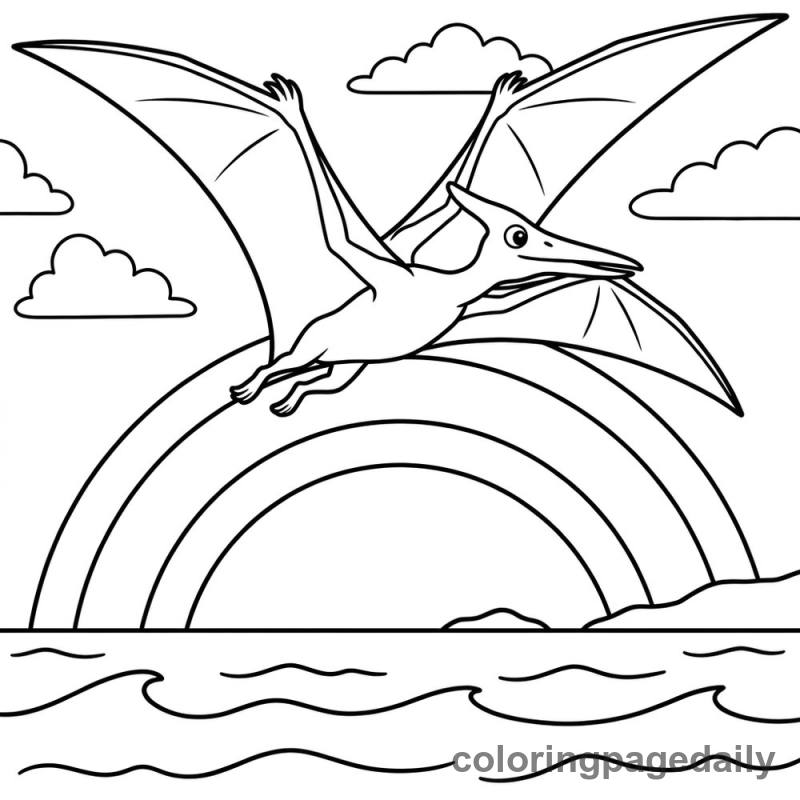
Our newest pages highlight the playful side of the Mesozoic Era. Your little artists can take to the skies with majestic flying reptiles or cool off in the ancient rivers with some friendly dinosaurs.
We've also added some gentle giants interacting with prehistoric plants and objects. Did you know the Iguanodon had a distinct, pointed thumb spike? Paleontologists believe they may have used it for foraging or defense. In one of our new pages, this clever dinosaur uses its spike to carefully crack open a tough prehistoric nut!
While the prehistoric pals are the stars of the show, their environments are just as fun to color. Here are some tips to help children develop their coloring skills by focusing on natural elements:
1. Radiant Rainbows and Skies When coloring the sky behind our soaring Pteranodon, encourage children to try simple gradient shading. Start with a darker blue at the top of the page and gently use lighter pressure on the crayon as they move closer to the ocean horizon. For the rainbow, this is a fantastic time to practice the classic order of colors (Red, Orange, Yellow, Green, Blue, Indigo, Violet).
2. Brilliant Bubbles and Ripples Water can be tricky to capture, but it's incredibly fun to color! On our new page featuring a Corythosaurus blowing bubbles, you can teach kids a simple trick about "highlights."
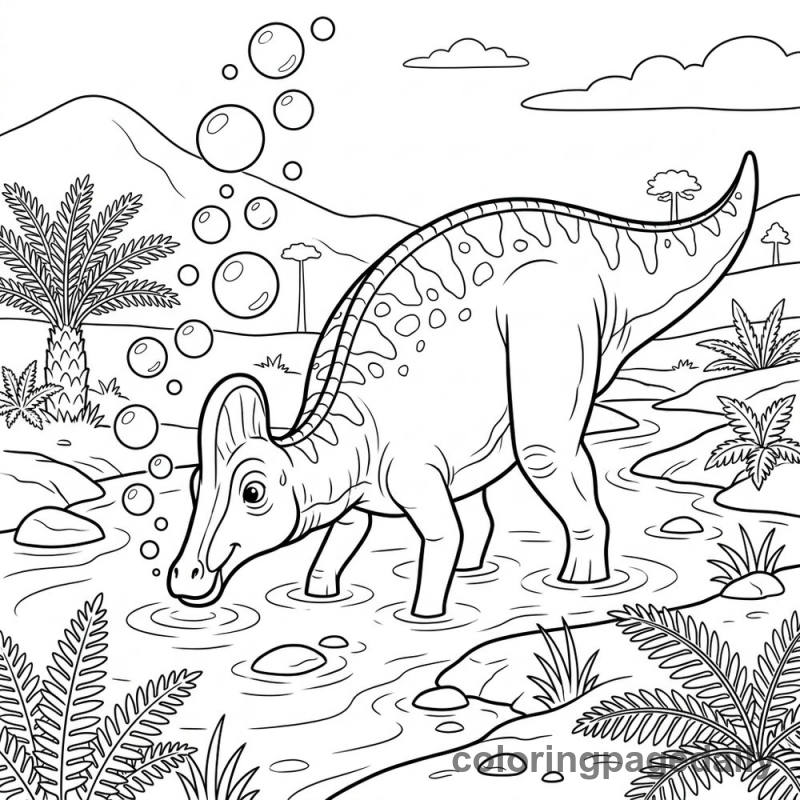
By leaving a tiny white circle uncolored on one side of each bubble, they can create a shiny, transparent effect. For river water, mixing streaks of light blue, teal, and even a little green adds depth and movement to the ripples.
3. Vibrant Vegetation Prehistoric ponds and jungles were full of life. When coloring the Parasaurolophus wading through the water, discuss how using different shades of green can make the plants pop.
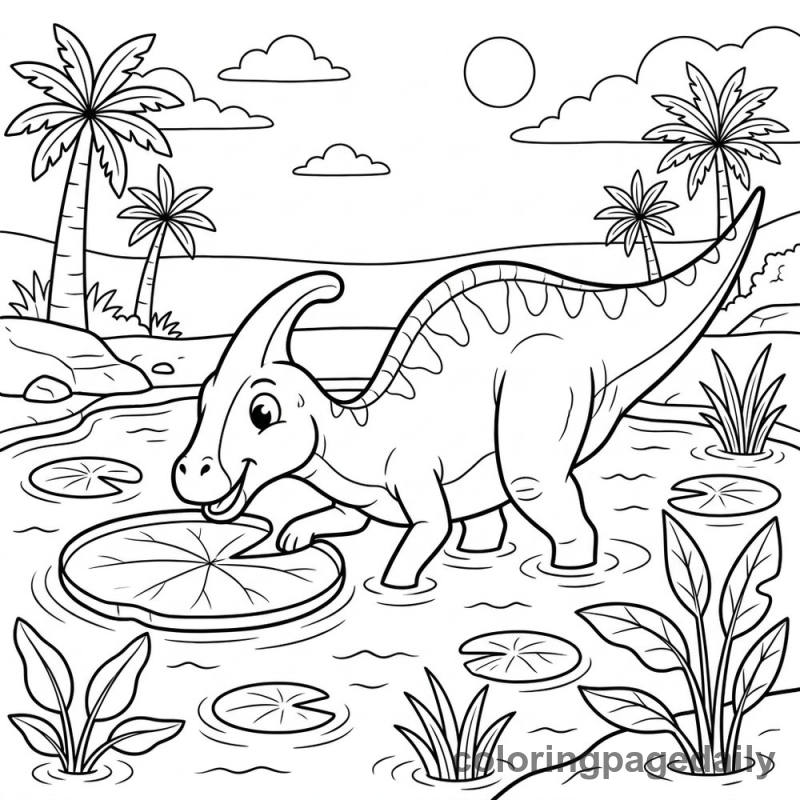
Teach children about color contrast: if they color the dinosaur in warm tones like yellow, orange, or red, coloring the lily pad in a bright, cool green will create a beautiful contrast. This makes both the dinosaur and the plant stand out beautifully on the page!
Grab your crayons, colored pencils, or markers, and let your little ones embark on a colorful journey back in time. Happy coloring!
This article is part of Playful Prehistoric Pals Vol. 2 — browse all 20 coloring pages