We are thrilled to announce a fresh wave of coloring pages added to our "Ocean Wonders & Sunken Treasures" collection! This month's update focuses on some of the ocean's most unique and fascinating creatures, from prehistoric shell-dwellers to playful marine mammals.
To help you and your little artists get the most out of these new pages, we've put together a quick digest filled with fun marine biology facts and creative coloring techniques for tricky details like spots, camouflage, and bubbles.
The chambered nautilus is a true marvel of the deep. Often referred to as a "living fossil," these incredible creatures have been swimming in our oceans for hundreds of millions of years, outliving the dinosaurs!
Coloring Tip: The nautilus shell is famous for its striking striped pattern. To make this prehistoric creature really pop on the page, try using warm colors like burnt orange, rust red, or golden yellow for the shell stripes. These warm tones will create a beautiful, vibrant contrast against the cool greens and blues of the surrounding fan coral and ocean water.
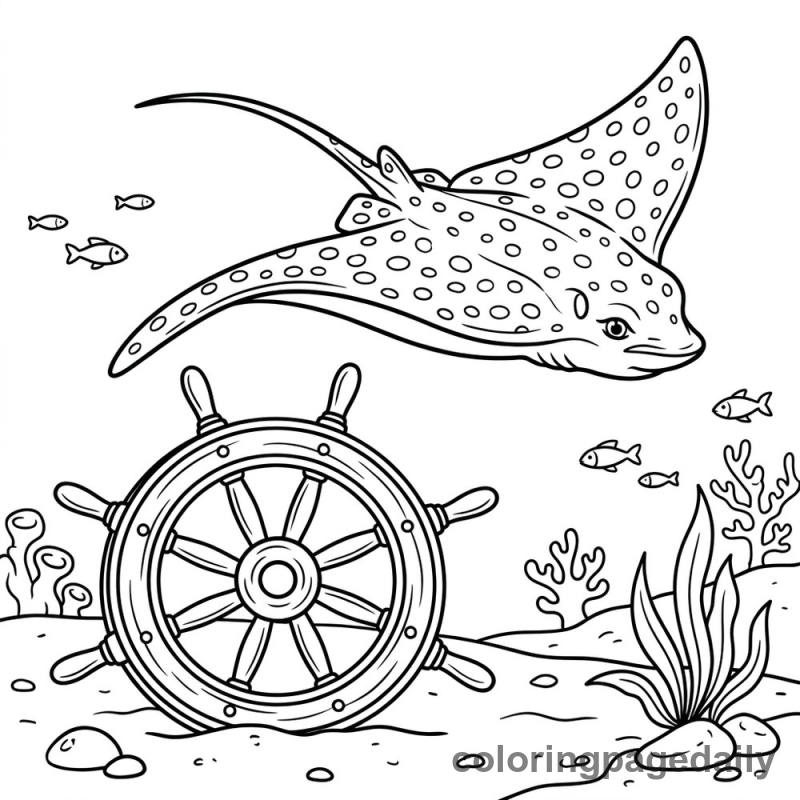
Did you know that the pattern of white spots on an eagle ray's back is completely unique to each individual? Just like a human fingerprint, no two eagle rays have the exact same spot pattern!
Coloring Tip: When coloring the eagle ray, it can be tempting for kids to just leave the spots completely blank. For a more realistic, three-dimensional look, try lightly shading the very edges of the white spots with a pale gray or light blue colored pencil. Then, color the rest of the ray's back a rich, dark navy or charcoal. The dark background will make those unique spots look incredibly bright.
Cuttlefish are the undisputed masters of disguise. They have special cells called chromatophores that allow them to change their skin color, and even manipulate their muscles to change their skin texture, in the blink of an eye to blend in perfectly with their surroundings.
Coloring Tip: Because cuttlefish can be almost any color they choose, this is the perfect page for kids to let their imaginations run wild! To replicate the look of their color-changing skin, try a technique called "stippling." Use the tips of markers or colored pencils to create hundreds of tiny, overlapping dots in various colors. It gives the cuttlefish a wonderful, textured appearance.
Dolphins are highly intelligent and playful mammals. They have even been known to create and play with their own underwater toys, like blowing perfect rings of silver bubbles to chase and bite!
Coloring Tip: Coloring transparent objects like water bubbles can be tricky. The secret is leaving a bright white highlight! Draw a thin, curved white crescent along one inner edge of the bubble ring to represent the bubble catching the sunlight. Color the rest of the bubble a very pale, icy blue.
Grab your favorite coloring supplies and dive right in! These new pages are a fantastic way to combine art time with a mini marine biology lesson.
This article is part of Ocean Wonders & Sunken Treasures — browse all 10 coloring pages