As spring unfolds, it's the perfect time to bring fresh artistic challenges to the classroom or kitchen table. While our "Nature's Little Helpers" collection celebrates eco-friendly habits and the great outdoors, it also introduces a wonderful mix of real-world woodland creatures and friendly mythical beings.
To help your young artists take their coloring pages to the next level, we've put together a specialized guide focusing on specific artistic effects: moving water, glowing light, metallic shine, and realistic shadows. These techniques are fantastic for developing fine motor skills and teaching children about contrast and lighting!
Coloring water can be tricky because it's always moving! When coloring our helpful baby Kraken tending to its ocean garden, encourage kids to avoid pressing too hard with a single blue crayon. Instead, teach them to use sweeping, curved strokes with multiple shades—like teal, aquamarine, and deep navy.
Pro Tip: Leave small, uncolored white circles or use a white gel pen to create the illusion of floating bubbles and sparkling water droplets falling from the conch shell. This adds an immediate sense of motion to the page.
Mythical creatures and magical plants offer a great opportunity to explore light. Moonflowers are fascinating night-blooming plants that seem to glow in the dark. To recreate this bioluminescent effect with our clever Kitsune, teach children about the power of contrast.
Pro Tip: Keep the center of the moonflowers bright white or pale yellow. Color the surrounding vase and background in rich, dark purples or midnight blues. The darker the background, the brighter the flowers will appear to shine!
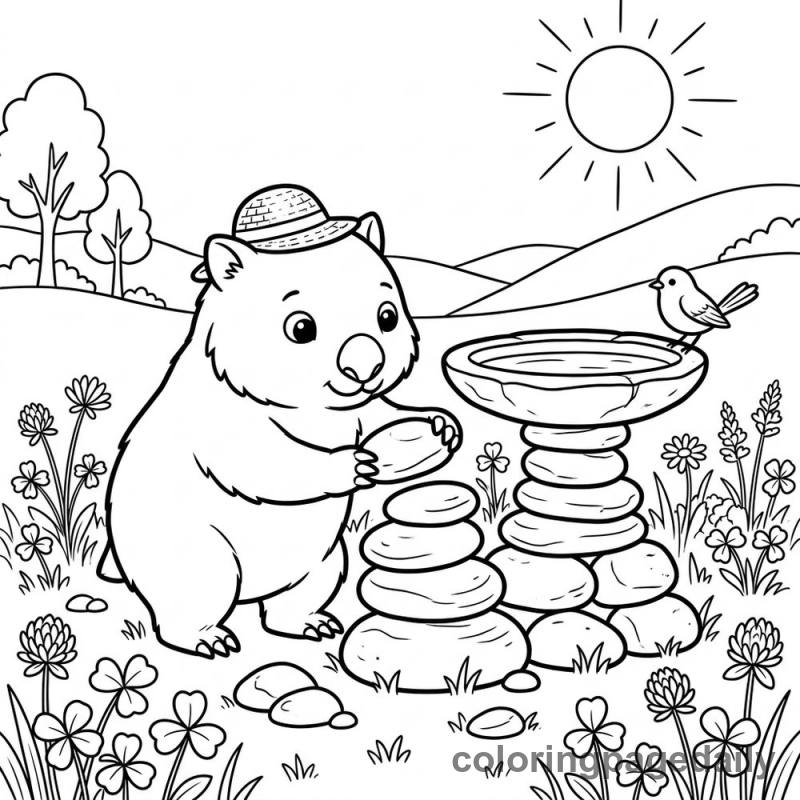
Stones and rocks are a staple of any garden or natural setting. When coloring the wombat's handmade birdbath, kids might be tempted to reach for a single gray crayon. Challenge them to look closer at real river rocks!
Pro Tip: Real stones reflect their environment. Have your young artists lightly blend hints of earthy brown, mossy green, or cool blue into the gray. To make the stones look round and heavy, shade the bottom edges darker where the sun doesn't hit them, creating a realistic 3D shadow.
Upcycling is a beautiful way to help the earth, and our artistic axolotl is putting vintage metal keys to great use! Coloring metal requires a different approach than coloring soft animal fur or plant leaves.
Pro Tip: Metal has sharp, distinct highlights. Kids can achieve a brassy or silvery look by applying a base color of yellow-ochre or silver-gray, and then using a dark brown or black colored pencil to outline the deepest shadows. Leaving a stark, thin white line along the edge of the keys will create a realistic metallic "glare."
By introducing these simple lighting and texture concepts, parents and teachers can turn a fun afternoon activity into an engaging art lesson. Grab your favorite coloring supplies, print out these charming helpers, and let the springtime creativity bloom!
This article is part of Nature's Little Helpers — browse all 20 coloring pages