Welcome to a magical beach where everyday objects turn into magnificent summer homes! As your students or children color these whimsical beach houses, it's the perfect opportunity to slip in some fun, educational facts about the objects they are decorating. Let's explore the science and history behind some of these fascinating items.
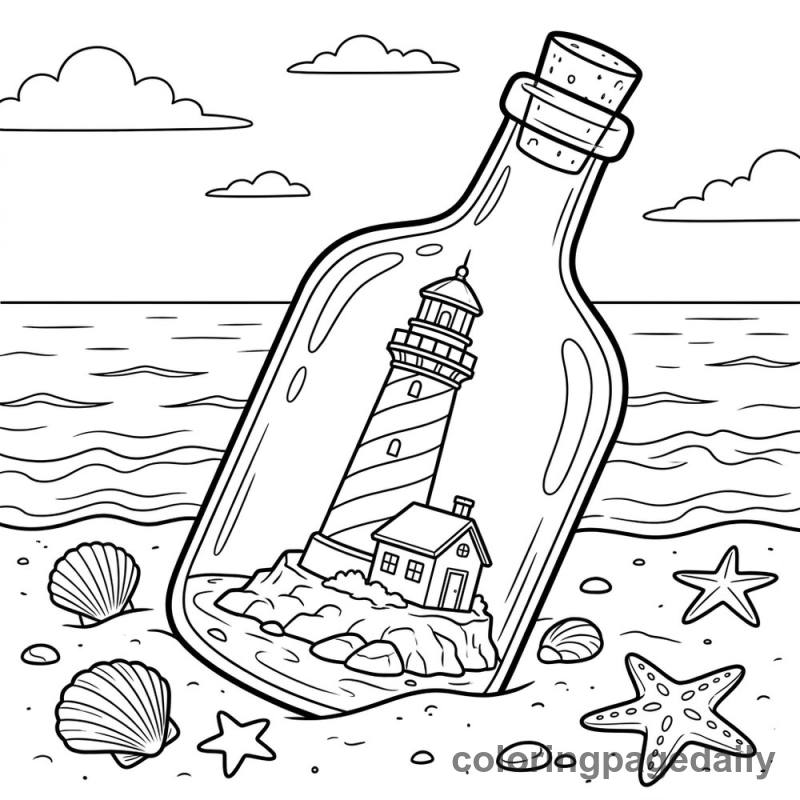
Lighthouses have been guiding sailors for thousands of years. The most famous early lighthouse was the Pharos of Alexandria, built in ancient Egypt. But how do modern lighthouses cast their light so far? In the 1820s, a French physicist named Augustin-Jean Fresnel invented a special lens (the Fresnel lens) that looked like a giant glass beehive. It could capture and focus light so effectively that sailors could see the beam from miles away! As kids color the miniature lighthouse inside the bottle, ask them to imagine how far its tiny beam could reach.
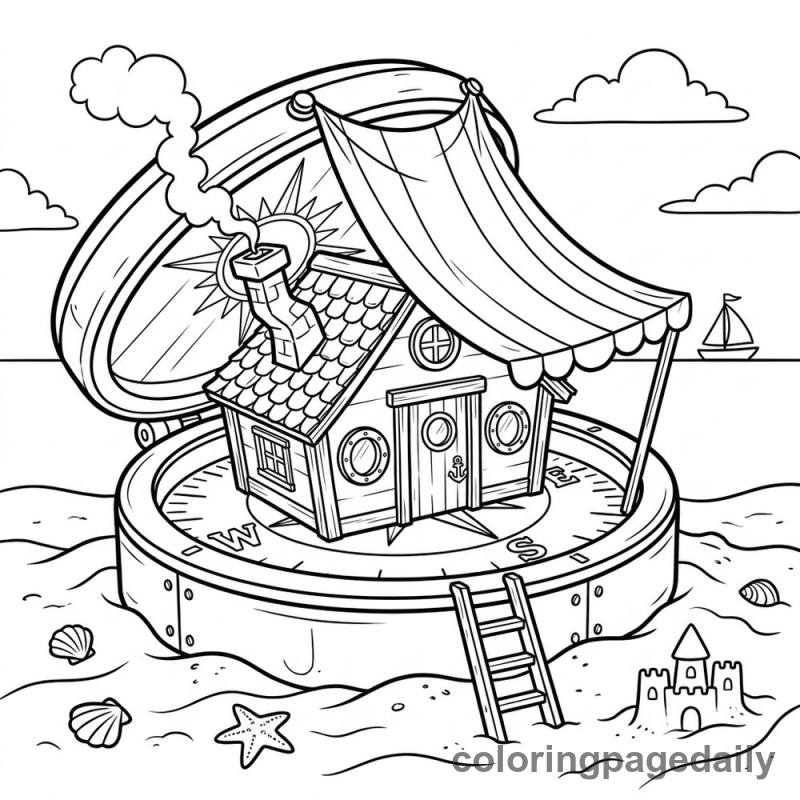
How does a compass know which way is North? The Earth itself is like a giant magnet, complete with a magnetic North and South Pole. A traditional compass contains a tiny, lightweight magnet balanced on a pivot point. Because opposite magnetic poles attract, the "North" end of the compass needle is drawn to point toward the Earth's magnetic North. The earliest compasses were invented in ancient China using a naturally magnetized iron ore called lodestone.
Binoculars are essentially two small telescopes mounted side-by-side. But did you know that if you just used curved glass lenses, the image you'd see would actually be upside down? To fix this, modern binoculars use special blocks of glass called prisms hidden inside the tubes. These prisms bounce the light around to flip the image right-side up before it reaches your eyes, letting you spot distant seabirds or approaching ships perfectly.
Before the invention of modern, lightweight scuba gear, ocean explorers wore heavy diving suits equipped with large metal helmets. These heavy enclosures kept the diver safely pressurized underwater and featured thick glass viewing ports. Because there were no portable air tanks, air had to be pumped all the way down from a ship on the surface through a long rubber hose!
Coloring is a fantastic gateway to learning. As your little artists bring these magical beach scenes to life, share these fun facts with them to spark their curiosity about navigation, optics, and ocean exploration!
This article is part of Magical Summer Beach Houses — browse all 4 coloring pages