Welcome to our latest update in the Magical Scenery & Hidden Worlds collection! This month, we are thrilled to introduce a brand-new set of illustrations that playfully bend the rules of proportion. Imagine stumbling through a quiet forest clearing only to find everyday household items that have grown to the size of buildings.
From oversized sewing supplies resting in the grass to a massive teacup forming its own river, these new pages are designed to spark curiosity and creativity in your little artists.
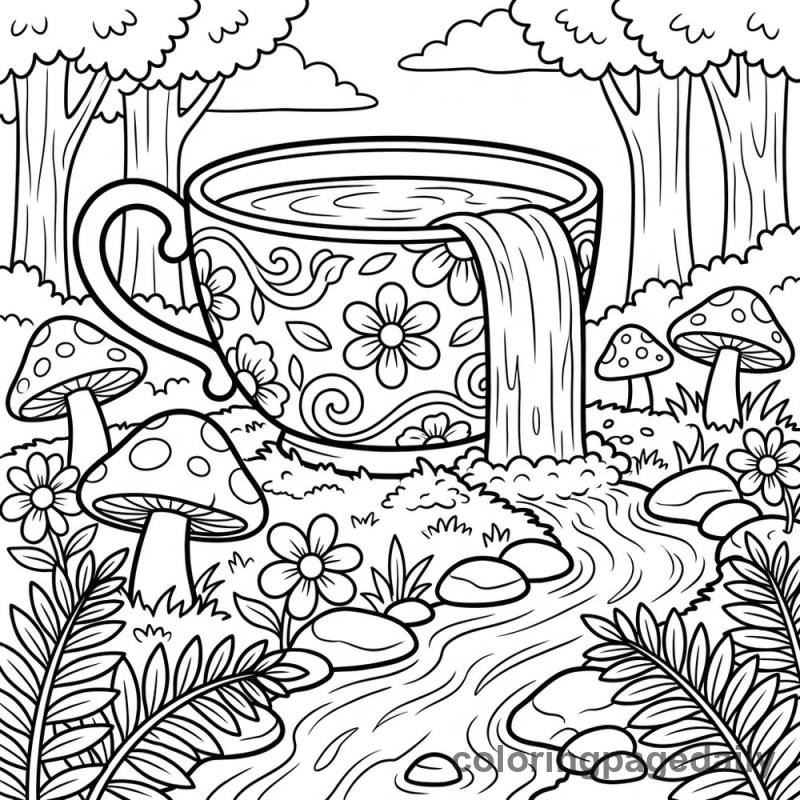
Playing with scale is a fantastic way to stretch a child's imagination. In art history, manipulating the size of objects is a classic technique. While ancient cultures often used "hierarchical proportion" to show a person's importance by drawing them larger than others, modern whimsical art uses dramatic shifts in scale to create a sense of magic and wonder.
When everyday objects like thread spools and needles are drawn at massive sizes, it encourages children to look at their environment from a completely new perspective—much like a tiny insect navigating our big world!
When kids color these giant objects, they might wonder how to make them look truly massive on a standard sheet of paper. Here are a few fun coloring tips you can share with your students or children to help them master the art of scale:
1. Anchor with Familiar Colors The secret to making something look giant is contrasting it with something recognizable. Have your child start by coloring the surrounding nature—like daisies, ferns, or leaves—in realistic, familiar colors (such as bright greens and yellows). By establishing these small, familiar elements first, the sheer size of the oversized magnifying glass or compass next to them becomes much more obvious.
2. Add the Patina of Time Giant, magical objects that have rested in a forest for years wouldn't look brand new! Encourage kids to add touches of "weathering" to their pages. A little bit of green crayon lightly shaded near the base of an object can look like creeping moss. Adding streaks of rust-orange or dull brown to brass and metal objects makes them feel heavy, ancient, and deeply rooted in the magical landscape.
3. Use Color Weight Darker, highly saturated colors generally feel "heavier" to the eye. To make a giant object feel heavy and grounded, suggest using bold, rich colors for the object itself, while keeping the background sky or distant trees slightly lighter and softer. This mimics atmospheric perspective, making the oversized object pop right out of the page.
These new additions to the Magical Scenery collection offer the perfect opportunity to combine art education with pure, whimsical fun. Grab your favorite colored pencils, print out these giant discoveries, and let your imagination grow!
This article is part of Magical Scenery & Hidden Worlds — browse all 16 coloring pages