As children color their way through our Future Space Exploration collection, they aren't just filling in spaceships and planets—they are visualizing the real future of human spaceflight! For parents and educators, these coloring pages offer a fantastic jumping-off point to discuss the actual science of tomorrow. Here are some fascinating, real-world educational facts about space habitats, off-world farming, and lunar exploration to share with your young astronauts.
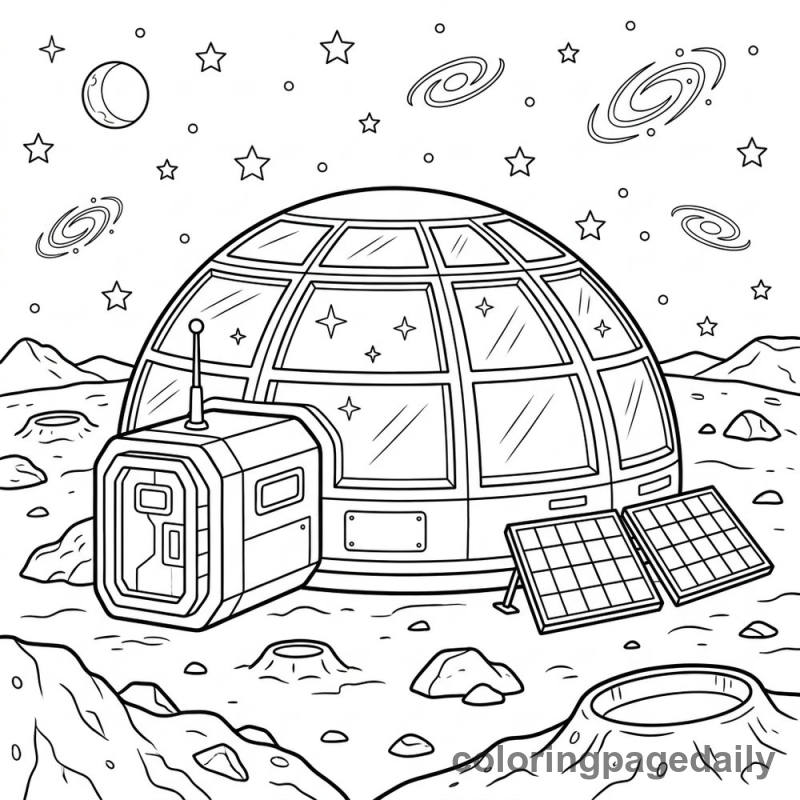
When humans eventually travel to Mars, they won't be able to simply pitch a tent. The Martian atmosphere is incredibly thin—about 100 times less dense than Earth's—and is made mostly of carbon dioxide. Because Mars lacks a global magnetic field, its surface is also heavily exposed to harsh cosmic radiation.
Future space habitats are often designed as domes, just like the ones featured in our coloring collection. The dome is an incredibly strong architectural shape that helps distribute the stress of internal air pressure, keeping astronauts safe and comfortable inside while protecting them from the extreme cold and radiation outside.
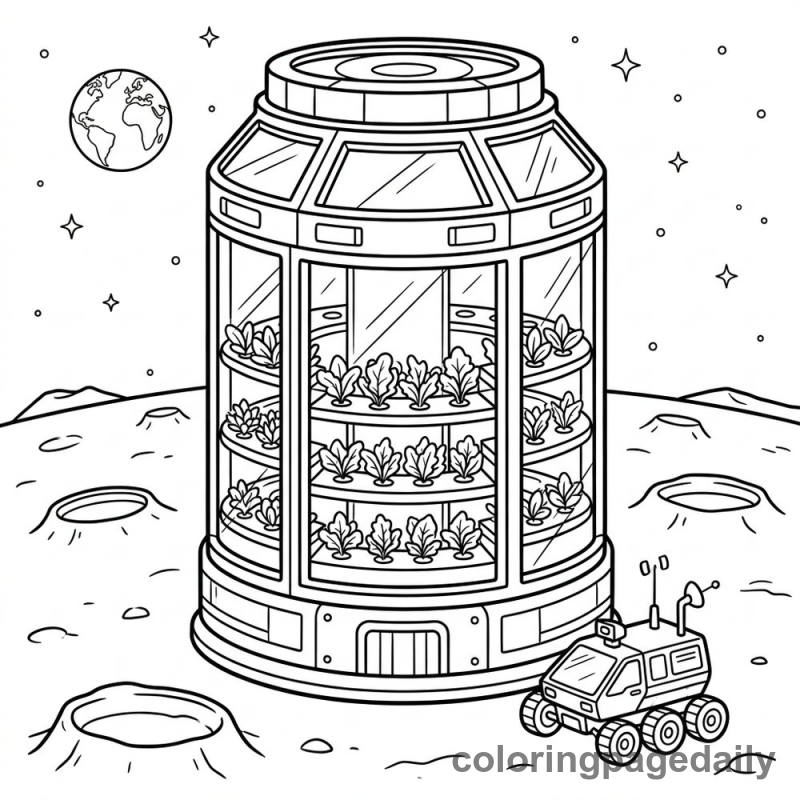
How will astronauts eat on multi-year journeys or inside permanent lunar bases? The answer is space agriculture! Bringing heavy soil from Earth is too expensive and inefficient, so scientists use a method called "hydroponics." This allows plants to grow in nutrient-rich water without any soil at all.
Space greenhouses and farming towers will be essential for future colonies. Not only do plants provide vital fresh food (NASA has already successfully grown lettuce, radishes, and peppers on the International Space Station!), but they also perform a crucial life-support function: they absorb the carbon dioxide astronauts breathe out and turn it back into fresh, breathable oxygen.
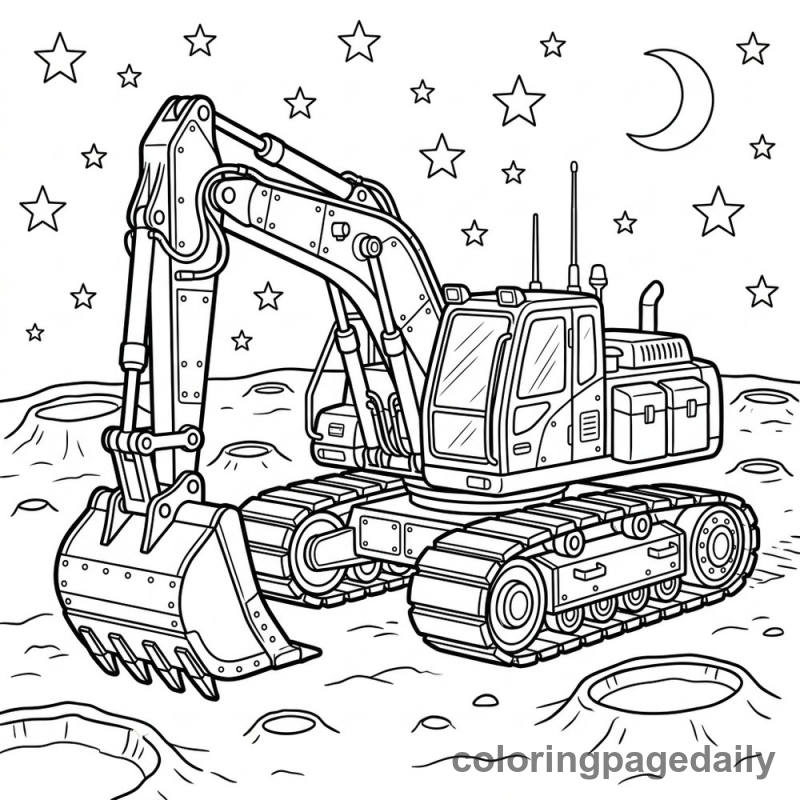
Before we go to Mars, space agencies are heading back to the Moon to stay. Future lunar missions will rely heavily on robotic rovers, bulldozers, and excavators. The Moon is covered in a layer of fine dust and crushed rock called "regolith." Unlike sand on Earth, which is smoothed over time by wind and flowing water, lunar regolith is sharp and jagged. This is why lunar vehicles need incredibly tough, thick tank treads to navigate the rough terrain.
Why do we need heavy excavators on the Moon? Scientists plan to mine water ice hidden in the deep, permanently shadowed craters of the lunar poles. This ice can be melted and purified for drinking water, or electrically split into hydrogen and oxygen to create rocket fuel. This process is called In-Situ Resource Utilization (ISRU), and it could turn the Moon into a deep-space gas station for future missions!
The next time your child reaches for their crayons to color a lunar rover or a space dome, share these fun facts with them. Combining creativity with real STEM concepts is the perfect way to inspire the next generation of explorers.
This article is part of Future Space Exploration — browse all 8 coloring pages