We are thrilled to announce a brand-new update to our Future Space Exploration collection! If your students or children are fascinated by the engineering that makes space travel possible, this latest batch of coloring pages is sure to spark their imaginations. From heavy-duty lunar construction equipment to the silent sentinels scanning the cosmos, we've added a fantastic variety of new scenes to your craft table.
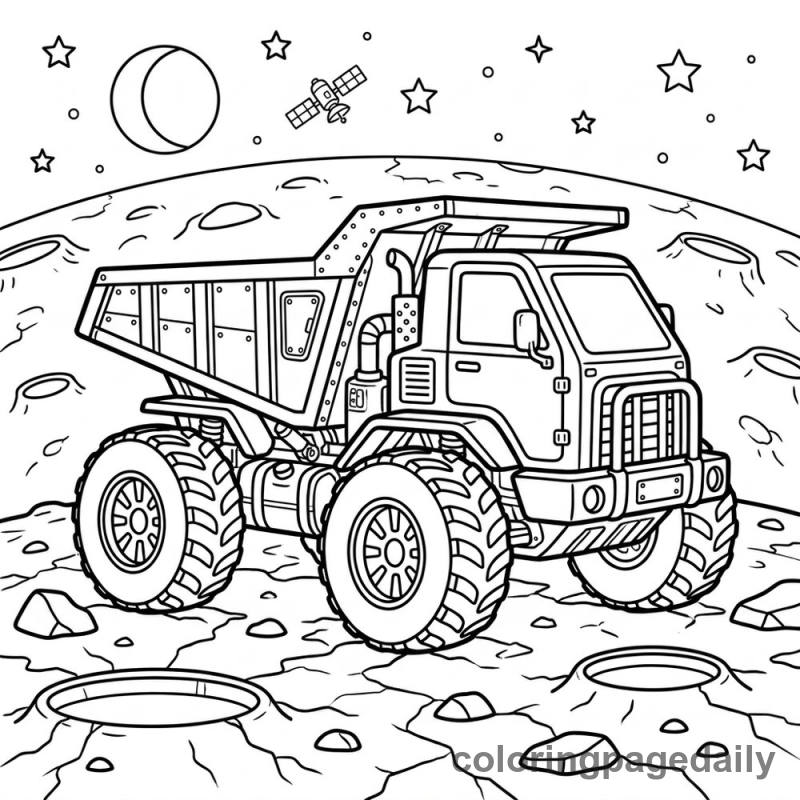
Kids who love big trucks will be absolutely delighted to take their favorite heavy machinery to the moon. Building future habitats requires serious equipment, and our new pages feature robotic vehicles designed specifically for off-world environments.
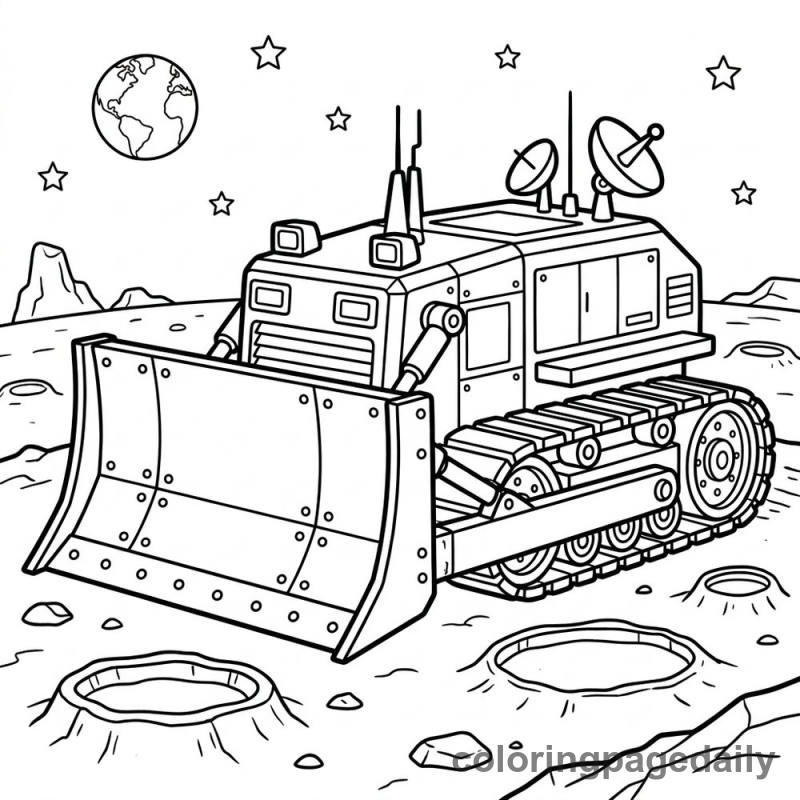
Educational Tip for Teachers: While your kids are coloring, you can share a fascinating fact with them! The moon is covered in a layer of sharp, powdery dust called "lunar regolith." Because there is no wind or flowing water on the moon to smooth the particles down, the dust is incredibly abrasive. That’s why real-life lunar vehicles are designed with special airless tires—often made of woven metal wire mesh or shape-memory alloys—instead of the traditional rubber tires we use on Earth!
Beyond the moon, we’ve also added highly detailed spacecraft that travel into the darkest corners of deep space. Satellites and probes are the unsung heroes of astronomy, gathering vital data from millions of miles away.
Our new radar satellite page is perfect for discussing how scientists map other planets. Radar instruments use radio waves to pierce through thick, cloudy atmospheres. For example, NASA's Magellan spacecraft used radar in the early 1990s to map the hidden surface of Venus! Kids can color the intricate circular dishes and communications arrays that send this valuable data back to Earth.
To help your young artists get the most out of these new pages, try introducing these two fun coloring techniques:
1. Stippling the Lunar Regolith Instead of just shading the moon's surface with a flat gray crayon, encourage kids to try "stippling." By tapping the tip of a fine marker or a sharp colored pencil repeatedly against the paper, they can create hundreds of tiny dots. This technique perfectly mimics the rough, dusty, and cratered texture of the moon's surface beneath the heavy treads of the lunar dump truck.
2. Solar Panel Shimmer Space probes rely on solar panels to generate power, and these panels are highly reflective. To create a realistic glass-like shimmer, have kids color the solar panels a base shade of light blue. Next, use a dark blue or black pen to trace the grid lines. Finally, use a white gel pen—or simply leave a diagonal uncolored streak across the panel—to simulate the reflection of distant starlight bouncing off the glass!
Grab your favorite coloring supplies and let these new additions launch your next afternoon activity into orbit!
This article is part of Future Space Exploration — browse all 8 coloring pages