When children sit down to color, their first instinct is often to simply fill the shapes with their favorite colors. While this is wonderful for creativity, introducing a few basic artistic techniques can turn a standard coloring session into a fantastic learning opportunity!
Our Animals with Hobbies collection is the perfect canvas for teaching young artists about light, shadow, and three-dimensional space. By guiding kids through these simple tricks, parents and educators can help them develop spatial awareness and advanced fine motor control.
Here are three easy ways to make your animal friends leap right off the page!
One of the easiest ways to create a 3D effect is by utilizing the white of the paper.
Take our clever octopus arranging its collection. Conch shells have smooth, curved surfaces that naturally reflect sunlight filtering through the water. Challenge your young artists to leave a tiny sliver or circle of white paper completely uncolored along the top curve of each shell. This simple "highlight" makes the shells look round, glossy, and realistic against the sandy ocean floor!
Sometimes, objects in a coloring page can look like they are floating in mid-air. You can easily fix this by teaching kids about cast shadows.
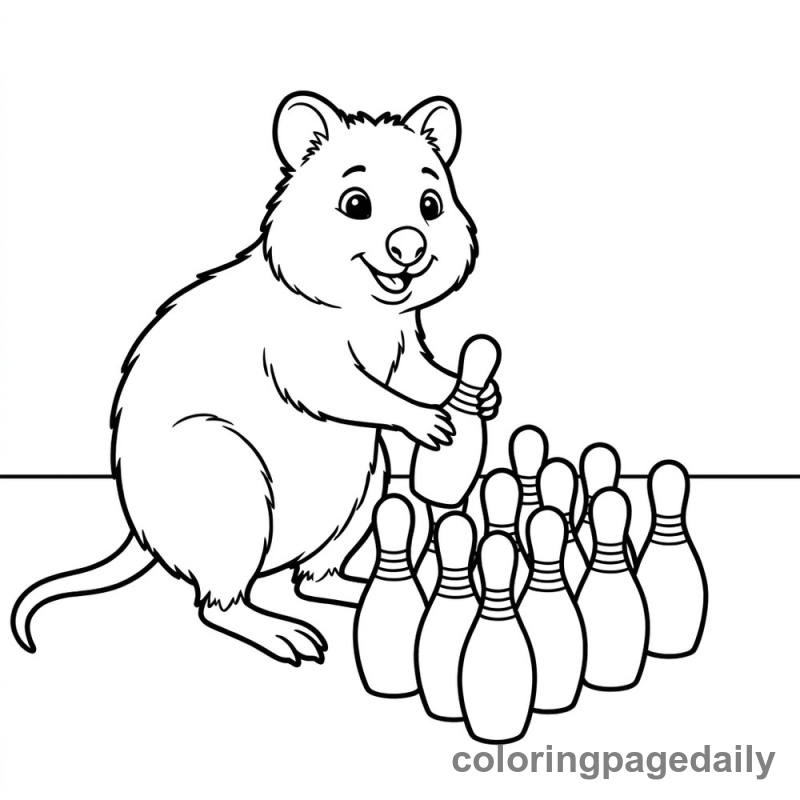
When coloring the cheerful quokka setting up a game, have your child take a darker green or gray crayon. Show them how to lightly color a small, flat oval right underneath the wooden bowling pins and the quokka’s feet. This technique instantly "grounds" the characters, giving the brain a visual cue that the pins are resting firmly on the grassy lawn. It’s a wonderful way to introduce the concept of gravity in art!
Understanding light sources is a big step in any young artist's journey. Instead of coloring an object with just one solid crayon, try mixing two!
In this scene of a red panda planting a spring sapling, you can create a beautiful, sun-kissed garden. Have children pick two different shades of green for the leaves. Use a bright, sunny yellow-green on the top half of the leaves (where the sun is shining down), and a darker forest green on the bottom half (where the leaf is shaded). This not only creates beautiful depth but also prompts kids to think about where the sun is positioned in the sky.
By practicing these simple highlights and shadows, your little ones will be creating masterpieces in no time. Grab your crayons and let the hobby-filled adventures begin!
This article is part of Animals with Hobbies — browse all 28 coloring pages